Pages

Sunday, 30 October 2011

Screenplays and novel writing

I'm currently turning my novel Replica into a screenplay. Why, I hear you cry - after all, if it's difficult to sell a novel which will cost a publisher £10,000 to produce (Snowbooks' figures), how much harder is it to sell a screenplay which will cost up to £500 an hour to make? (That's BBC tarifs - I couldn't find the total cost of a made-for-TV 90 minute film.)

Partly it's because I think Replica would transfer well to the small screen, and partly because it's an interesting challenge. Screenplay writing is very different from novel writing; since there will be input from the director, actors, set and costume designers, on the page it's the dialogue that does all the work. You don't say what the characters are feeling; you don't write backstory; you don't tell the actors how to deliver the lines. So the dialogue has to be very good indeed.

You lay the screenplay out to an accepted format, in Courier 12, as in the picture. This enables the length of a script to be assessed quickly. A film should come to no more than 120 pages. I'm a concise writer, so it's a new sensation for me to have to cut scenes and dialogue. I now realize why adaptations often have whole subplots missing, and why films can be so different from the original novel.

I've a nasty feeling it probably takes as long to become proficient at writing screenplays as it does to write readable novels.

Saturday, 15 October 2011

Harper Collins, Authonomy and ebooks

Harper Collins sent out an email this week about its new plans for Authonomy. The site will have a new look, there will be 'improvements to forum control' (better late than never, I suppose) and Scott Pack and a team of editors will be searching the site, selecting the best novels to be digitally published by Harper Collins, one a month starting in January 2012. Those novels that sell well will be produced in a print edition. You can read about it here.

Over the course of three years, HC has shown little faith in the writers on its site, or the ranking system it put in place. It has published only two novels from Authonomy authors, and those not from the top five, a big let-down for anyone who believed the hype when it launched. Years ago, members suggested that HC should bring out POD paperbacks of the top five each month, maybe have special stands in bookshops, promoting HC New Authors. Some books would be successful, thus financing the scheme. Possibly this idea was unrealistic.

Scott Pack's new scheme is a good one, if a year late, but then mainstream publishing moves slowly. Ebooks (in spite of publishers' protestations) are very cheap to produce; you need a cover, editing, proofreading and formatting, and you're good to go - from then on, it's all profit. The print versions of books that have proved their popularity will be risk-free.

I can see a couple of problems, though. One is that many of the best writers on Authonomy have left and self-published. Will HC want to publish books already available as ebooks? Probably not, which means they'll miss a lot of talent. The other problem, for authors,  is the contract they will be offered. Publishers rely on authors' desperate longing to be 'properly' published. I somehow doubt there will be any advances. No details have been given, but I think any contract is likely to be so weighted in HC's favour that you'd need to think very carefully before signing it.

Take a look at this clause concerning a Harper Collins short story contest - and note, it covered every entry, not just the winners:

Where you submit your entry to this site...by such submission you grant UKTV and HarperCollins Publishers Limited each a perpetual, irrevocable, royalty-free, non-exclusive, worldwide, sub-licensable right and license to use, reproduce and publish, distribute and make available to the public your entry in any media, now known or later developed, for the full term of any rights that may exist in such content.

On the other hand, any big publisher has a lot of clout and ability to promote. It'll be very interesting to see how this works out.

Saturday, 8 October 2011

Kindle highlights


Amazon has a new feature for Kindle users (you need to sign in). You can keep tabs on the books you are reading, have read, or stopped reading, and the notes you made on them. You can choose to make this information public.

Of course, I rushed to see if readers had highlighted anything on my books. With Remix, proudly ranking 4395th in books with Public Notes, oddly it's the first lines and my website address. With Replica, I was delighted to find this note on the thoughts of my hero, Nick Cavanagh:

Jeff shared
"She’s forgiven him, when she should have spat in his eye. What were women like? Either demanding harridans, bawling you out for nothing, impossible to please, or putting up with murder and apologizing while they did it. He reckoned he was due one of the second sort."
Note: So true !
2 months ago

How cool is that?

Saturday, 1 October 2011

What are publishers thinking?


Today I noticed a novel
because of the lovely colours and lettering on the cover (I take note of book covers I like, in order to work out how they were done - all part of my efforts to get on top of Adobe Photoshop 7.0).

As I write, The Lady of the Rivers , as well as being at #48 in the Amazon paper book charts, is at #82 and rising in the Kindle top 100, priced at £11.49. The paperback (not yet released) is £5.99, the hardback £6.68.

I wondered what is going through the minds of the publishers, Simon & Schuster...

  • Philippa Gregory has a lot of fans, many of whom will pay this outrageous price in order to get her latest book - then we can drop the price later, and pick up more sales.
  • We don't like Amazon, and don't want to help it to do well with books for the Kindle.
  • We don't like ebooks - we'd really rather they went away; if we make them more expensive than paper books, maybe people will buy those instead.
  • And if they DO buy the ebook at this price, what a lot of money we'll make. After all, we're only paying Philippa and her agent 17.5% of the price, and it's costing us nothing at point of sale. No paper, printing, delivery, storage, returns. Ho ho ho.
But what about piracy? If the book isn't available for free illegal download now, it certainly will be in a day or two. And if anything is going to make normally law-abiding readers download a copy from pirate sites and get into the habit of so doing, this sort of rip-off pricing will.

Wednesday, 28 September 2011

Publishers to get stranglehold on Amazon Kindle sales?

I think Stephen Leather is right (see my last post, Sunset or sunrise on the Indie Summer). The Indie Summer may be over. What made me come to this conclusion, apart from my own drop in sales? This article in The Bookseller, Amazon readying October Kindle offer. Let me quote:

Amazon.co.uk has asked publishers for discounts of 90% on titles in order to participate in an October Kindle promotion.

The campaign is due to run from 17th to 31st October inclusively. Amazon has told publishers this will be the "main focus for our merchandising efforts during this period", and would be supported with emails, on Facebook, and via Twitter. It has asked for new frontlist as well as key backlist titles.

Of course, publishers are grumbling about this - they hate to reduce their prices, and have spent the last year coming up with specious arguments as to why an e-book should cost as much as a paperback, in spite of savings on paper, print, transport, storage and the pulping of remaindered books. But I'll bet they were pleasantly surprised by the profits they made during Amazon's Twelve Days of Kindle, Spring Spectacular and Summer Sale. Amazon wants to encourage them to produce more and better products (many mainstream books' formatting is poor) at a lower price.

At the start of this year, along with other self-published books, Remix was featured on Amazon's promotional pages. This gave it a huge boost. The same hasn't happened with Replica, nor have I noticed any other indie books being promoted recently. This may be because there are now many more trad published books available. And the algorithm tweaks, which made rankings less 'sticky' and changed the recommendation system have hit our sales particularly, as we don't have the marketing opportunities big publishers do.

It's not a conspiracy. I don't think Amazon has anything against self-published books. Amazon constantly seeks ways to improve its selling and profit, and indie sales are just collateral damage. But it's kind of depressing to suspect that within another year, big publishers will have established the same stranglehold over digital that they have always enjoyed over print.

Once more, the authors they reject will have no way of reaching readers, and readers will not have access to some books they would have loved.

I do hope I am wrong about this.

Tuesday, 20 September 2011

Sunset or sunrise on the Indie Summer?

Stephen  Leather, 19th September 2011, UK Amazon Forum:
"I think a lot of 'Indie' writers are going to find the times ahead quite difficult. Most don't really understand how publishing works and have had their hopes and ambitions raised by the sudden interest in eBooks which started late last year. But the simple fact of publishing remains the same - very very few writers make a living from their writing. It has always been that way and just because companies like Amazon make it easy for anyone to publish their work doesn't change that fact.

A lot of Indies thought that because they were selling lots of books at the start of this year that they now had a guaranteed income stream and that they would be earning money for ever more. That's not how publishing works. It doesn't work that way with paperbacks and people are starting to realise that it doesn't work that way with eBooks either. Most of the books that were in the Top 10 at the start of the year are now selling just a few copies a day. Writers who were heading the bestseller lists in the spring are now lucky if they have a book in the Top 100. And by next year most will have dropped out of the Top 1000. Books come, and they go. So do writers. It has always been a precarious way of earning a living and that hasn't changed!

What we have seen over the past year isn't so much a revolution as a bubble. The bubble isn't going to pop, but it is now deflating slowly and will continue to do so, and my prediction is that once everything has settled the eBook bestseller lists will be dominated by the same names that top the print lists. Just my humble opinion...."

Mark Williams, 11th September 2011:
"Fully one third of the top 500 ebooks on Amazon are indie-published. That means that the trad publishers, with all their money, their professional resources and their years of expertise, their huge marketing budgets and their acclaimed ability to know what readers want to read, combined with long-published names that have loyal followings built up over decades, can only manage to hold 66% of the market.

Indie publishers, on their own, often complete beginners, unknown names with no following, no resources and a shoestring budget, are mopping up 33% of the ebook market. And that can only get bigger.

How on Earth can totally inexperienced indie authors, most with day-jobs, just come along and outsell the experts? Here’s why: The success of the indie e-publisher is based on their ability to be flexible; to price low; to offer quick turnaround; and to engage directly with readers and deliver what the readers  actually want to read, not what the gatekeepers think readers should be reading."

So who is right?
Speaking from my own experience, just when I expected to sell more - the two month Amazon Summer Sale is over, and I've published two new books - my sales have slowed dramatically. I am not alone; it seems to be happening to most other indie writers. See this thread here on Kindleboards. The consensus is that Amazon has tweaked its algorithms twice this year, back in spring and about a week ago, each change incidentally making it a less favourable marketplace for the self-published, and better for the big publishers.

Publishing is still in a state of turmoil, though, and the fat lady sings on. Pottermore, due to launch next month, will be a game changer. Agents and publishers feel beleaguered, and with good reason. Indies have got a taste of freedom and success, and will never again feel quite so abject towards the publishing industry.

For me, the last year has enabled me to prove there is a readership for my writing, and cock a snook (whatever that may be) at all the agents who rejected my novels. I've sold over 44,000 books, and made quite a bit of money. Even if it is all downhill from now on, I'll be eternally grateful for the opportunities Amazon gave me.

Friday, 16 September 2011

I've published my first two fantasy novels...

I finally decided to publish for Kindle the first two novels I wrote, Torbrek...and the Dragon Variation and Trav Zander. 

I hesitated because they are such a different genre from Remix and Replica. Difficult to pin down what they are precisely - in fact, the way I generally describe them is fantasy for readers who don't usually like fantasy. For one thing, the characters talk like normal people instead of in that stiff archaic way so common in fantasy fiction. The setting is medieval with dragons, but no magic or elves. Especially not elves. They are suitable for any age reader from young adult upwards.

One of my favourite comments came from Steven Cudahy: "I love the characters. You seem to have managed to create a set of people halfway between Lord Of The Rings and Monty Python's Holy Grail."

I'm looking forward to seeing what the new gatekeepers, readers, think of them.

Torbrek...and the Dragon Variation UK 99p, US $0.99

Trav Zander UK 99p, US $0.99

Thursday, 8 September 2011

Just Fiction Edition scam

Today I got this email:

Dear Ms Revellian, 


I am writing on behalf of a new international publishing house, JustFiction! Edition. 

In the course of a web-research I came across a reference of your manuscript TRAV ZANDER and it has caught my attention. 

We are a publisher recognized worldwide, whose aim it is to help talented but international yet unknown authors to publish their manuscripts supported by our experience of publishing and to make their writing available to a wider audience. 

JustFiction! Edition would be especially interested in publishing your manuscript as an e-book and in the form of a printed book and all this at no cost to you, of course. 

If you are interested in a co-operation I would be glad to send you an e-mail with further information in an attachment.

I look forward to hearing from you. 

Kind regards 

Evelyn Davis
Acquisition Editor

Lots of writers have received similar emails recently. Go to Just Fiction's website and it's curiously vague about the details of what is on offer should you sign up with them. Check out Writer Beware and you will find it most likely appropriates your rights forever and pays you 10% royalty - extremely stingy for ebooks, even by publishing standards.

It's a sad fact these days that if a publisher expresses interest in your novel off his own bat, it is almost certainly a scam. Don't be flattered, do be suspicious. You can do better than this on your own.

Sunday, 4 September 2011

Revenge of the Rejected

Anyone who has tried to get a publishing deal knows it's currently harder than ever. If you succeed, the advance is likely to be small and the contract all-inclusive ( just in case something unforeseen like holograms or brain implants become the dominant format some time in the future.) I've speculated before that all this rejected talent may come back to bite the publishing industry on the bottom, and with so many indie books in the Kindle charts, I think there is now evidence this is happening.

It's easy to say when JK Rowling chose to e-publish Harry Potter herself via Pottermore that with her money and clout, she can do what the rest of us can't. But there's more. Mostly in America, publishers have picked up the best-selling indies - at a price. (If they'd had the wit to sign Amanda Hocking when she was submitting the year before, they'd have got her for much less than the two million dollars they paid.) Barry Eisler turned down half a million dollars from St Martins to stay indie. John Locke, a prolific and successful indie writer, has just signed a deal with Simon & Schuster. But it's a pretty unusual deal - it's just for print books. He retains ebook rights.

No eager publisher has contacted me. But in the unlikely event of this happening, would I be interested? I'd love a print-only deal that would get my novels into the bookshops, and handle foreign and film rights for me. This is improbable, though; I imagine they'd want full control, with a modest advance of five or ten thousand - and I've earned more than that on my own in one year of self-publishing. Add the loss of control, a delay of eighteen months before publication, and paper book sales dropping all the time as digital rise, and I'd feel a distinct lack of enthusiasm.

Bob Mayer, a New York Times best selling author, has been approached three times in the past month by trad authors asking him how ebooks work. He says, "Frankly, I don’t think anyone in NY Publishing really understands the big picture of ebook publishing from writer to reader." I'm not sure they get the small picture, either. Inexcusably, some formatting is  carelessly done. I often notice blurbs on Amazon for mainstream published ebooks with duplications, stray bits of HTML, or missing punctuation. Sometimes the author's page is left blank. When I told an author friend I'd noticed mistakes in his blurb, he said that was the responsibility of the marketing department, and it was difficult to get them to change things.

So: we have good books the public wants to read being rejected by publishers. Midlist authors are treated badly by their publishers. Bookshops are struggling, closing or changing hands. A growing indie movement has proved astonishingly successful over the last year. Writers and readers have more choice and opportunity.


Vive la ré
volution! 

Tuesday, 30 August 2011

Decoding a novel

It's easy to forget just how remarkable books are; black symbols on white paper or screen create images and concepts in our mind which can make us laugh or weep. The strange process of reading, once it has been acquired in childhood, is forgotten and taken for granted. This is a miracle that enables a truly good book to transport us to another world and consciousness in a totally absorbing way.

A reader reviewing Remix said, "... as I was reading it, it played through like a film in my mind. Very rarely a novel appears like a film to me and it's a sure fire sign that I'm enjoying it."

When I write a scene, I observe it as if it were a film; so the film playing in my mind was transcribed, published, sent to her Kindle, then replayed as a film for her. Interesting to speculate on the differences between our respective films; Caz's workshop imagined by her will not be the same as my image of it, as it's based on places she has never been to - but if I've done my job well it'll be none the worse for that. (I wonder what her Ric Kealey looks like? Drop dead gorgeous, of course...)

Thinking about this, it occurs to me that books are written in code, and only the right reader is able to correctly decode them.  It is a joy for a writer when a reader totally 'gets' her novel, and of course, not everyone will, even with the most popular authors. Myself, I reckon my decoding of Jane Austen or Mary Renault is in the high nineties, percentage-wise, but for Dan Brown, DH Lawrence or Dostoevsky it's down in the low thirties.

Wednesday, 24 August 2011

Doomed, we're all doomed!

It's been a week for prognostications of doom about the future of publishing, with Ewan Morrison writing at inordinate length about how grim everything is in The Guardian, and Graham Swift maintaining the rise of digital books could even mean authors would stop writing (yeah, right). I wondered whether the invention of the printing press had met with similar reactions, and pootled round Google to find out.

I got a bit waylaid...

Apparently, the Black Death was the catalyst that speeded transition from hand-copied manuscripts on vellum to printed books on paper. Many monks closeted in crowded monasteries fell victim to the plague, leaving fewer scribes; the price of manuscripts, already hugely expensive, went up. A vastly reduced population became better-off as they inherited from those who had died. They bought new clothes the way you would, thus making lots of rags available for the production of paper; the cost of paper books went down.

Printers now decided what to print, rather than the Church. It made sense to print the books readers wanted. They realized that the real market was not for big heavy volumes of the Bible and religious tracts, but for smaller and cheaper books on a wide range of subjects. The Church was no longer in charge of the dissemination of knowledge, because it could no longer control what people read. It got rather cross about this, but there was nothing it could do to halt the rise of the new technology beyond issuing dire warnings to an unheeding public.

Does any of this sound vaguely familiar?

Tuesday, 16 August 2011

Writing the next novel...

Jonathan Morris said about writing a screenplay, There are three stages of writing a script: being unable to start it, being stuck in the middle, and being unable to finish it. Just like novels, then. It's a wonder so many get written.

One of my favourite quotes is Lynne Truss's, concerning well-meaning friends who enquire how you are getting on with your book. "It was peculiar," they say to one another, when I pop out of the room. "All I said was, 'How's the novel?' and look, she bit my hand." I know from personal experience this also applies to silversmithing, and no doubt all other fields of creative endeavour. Stick to asking where your friend is going on holiday is my advice.

How terrible life must have been for Harper Lee after she had written her one and only hugely successful novel. To Kill a Mockingbird is a hard act to follow. She worked on another book, called The Long Goodbye, but eventually put it away unfinished. During her long life, how many kindly people have asked her what she is writing now? Ditto Margaret Mitchell, after Gone With the Wind won a Pulitzer Prize.

And I bet JK Rowling, in spite of all her riches and success, is currently fretting about her next novel, or lack of such. Just don't ask her when it'll be out.

Tuesday, 9 August 2011

My first year of Kindle self-publishing

Exactly a year ago today I published Remix on Amazon for the Kindle. I didn't blog about it, because I wasn't expecting much. If I could magically whisk back in time and tell my younger self she would sell over 40,000 e-copies of her books by the same time next year, she'd be astonished. And so is the older me, except I've had time to get used to it.

August 2010 I sold 3 copies of Remix on Amazon. Near the end of September, I lowered the price, and sold 78 that month. In October, it was 700, and Remix went into the UK Kindle top 100. That Christmas, the Kindle turned up in lots of UK Christmas stockings. Sales exploded. In January I sold 5,939.

Many factors affect sales, and most of them you can't control. As you sell more, Amazon makes your book more visible - but the opposite happens if your sales falter. As Remix sales dipped towards the end of March for a variety of reasons, Replica was out with beta readers and I was designing its cover. Replica was published 9th April 2011, and Remix fans sent it straight into the top 100. In May my sales were 7,196. Remix has spent over eight months in the top 100.

Like many writers, I dreamed of mainstream publication, and spent a year submitting Remix. But as someone who has always been self-employed, and as a single mother, I'm used to doing everything myself. I've enjoyed learning how to do covers and formatting, and writing a blurb is much easier than writing a synopsis.

Publishing is changing so fast, who knows what is round the corner? Is this a brief golden age for indies, an opportunity that will vanish as the industry gets its act together? Maybe. But it's really nice while we've got it.

Grateful thanks to Amazon, and especially to all my readers.

Saturday, 6 August 2011

Book promotion or nagging?

Anyone who's brought up a child knows that nagging doesn't work (not sure what does work with a teenager, but that's a subject for another blog).

So there is simply NO POINT adding a sombre, "Please enjoy responsibly," to a radio advert for alcohol. That is so not going to make the listener think, "Dear me, in that case I'd better not go out with my mates and get ratted tonight as planned." Similarly I doubt all the messages on cigarette packets persuade smokers to desist. The thing about nagging is that it's irritating, so people tune it out.

Indie authors, who have to market their own books, sometimes forget this. Every now and then, you come across a post like this:

Hi everyone, my thriller The Tattooist is on special offer for 99p!

What starts as just another murder investigation for DI Beverly Richards gradually turns into a nightmare, as a ruthless serial killer known as The Tattooist slays and mutilates lots of attractive young women and a few children and pets too, then tattoos clues on to their skins to taunt the police.

In a unique twist, the killer begins to hunt the cop hunting him! Beverley must find him and stop the slayings before he slaughters her, her twins, and her pet lop-eared rabbit, while simultaneously dealing with a hard-drinking boss who wants her taken off the case. Not to mention unfinished business with a man from her past who may not be what he seems.

Time is running out for Beverley – can she beat her demons and survive a final show-down with The Tattooist?

Happy reading!

Perhaps they worked, in the early days of the Kindle; but now, I think there have been so many of these posts, often inappropriately posted on half a dozen threads simultaneously, that potential readers mostly screen them out. On the US Amazon forums, such was the proliferation of Buy my book! posts that Amazon has declared zero tolerance, banning even discreet book links in signatures.

Writers need readers, and won't get them by badgering.

Saturday, 30 July 2011

Writing and self-discovery, by John Harding

Today I'm pleased to have a guest post by John Harding, a mainstream author with four published books.

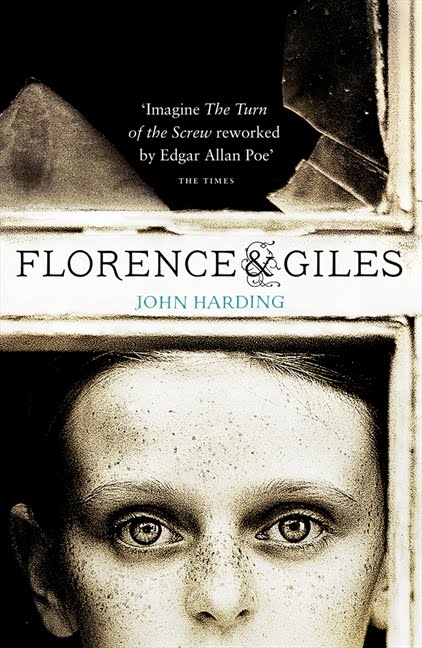
His first novel, What We Did On Our Holiday, was short-listed for the W H Smith New Talent award and became a bestseller. It was made into a two-hour TV film by Granada in 2006. His latest is Florence and Giles (only 99p for Kindle) which I thoroughly enjoyed, though as a gothic literary thriller, it's a bit outside my comfort zone. The story is gripping, but what made it for me is the twelve year old narrator Florence's idiosyncratic use of language. I was very taken with Florence.

I suggested John write something about the writing process, and this is what he wrote:


I DIDN’T KNOW I KNEW THAT
by John Harding

The American novelist Wally Lamb once wrote: ‘I write to discover what I didn’t know I knew.’ I find it’s a phrase that resonates and by way of illustration, let me tell you a story about me.

In my novel Florence and Giles, for reasons I won’t go into here, Florence, the 12-year-old narrator, has never been allowed to learn to read. But one day she discovers the neglected library of the decaying old mansion where she lives, an immense dusty, disregarded room crammed with books. Visiting it in secret, she teaches herself to read, and then proceeds to work her way through the books there. It’s a forbidden, clandestine act, and Florence has to take many precautions to avoid being caught. If she is, she’ll be banned from the room and have no more books again. So she’s always extremely careful to leave the books exactly as she found them.

Now, when I’d finished it, one of the things I liked about Florence and Giles was that my previous three novels had all contained clear elements of autobiography. For the first time I’d written a book that had nothing to do with my life. Everything in it was completely made up. Or so I thought.

After the book came out I was giving a talk about it one day and someone asked a question – I can’t even recall what it was now – and suddenly I found myself replaying an episode from my childhood. It wasn’t just something I hadn’t thought about for nearly years; it was something I’d completely forgotten.

I grew up in a house with only four books in it on a council estate in a bleak and remote Fenland village where culture simply didn’t exist. It’s likely I’d never have become a prolific reader, let alone a writer, but for one thing. I had my early education in the village primary school (roll call 90 kids) and my mother was the school caretaker. Or, take away the fancy title, the cleaner. Every day when school finished at three o’clock and the teachers and the other kids all left, I stayed behind and my mother arrived and got to work. Last thing every day, before they went home, every pupil had to put his chair on his desk. First thing my mother did was to sweep the floors and when she’d done that (it didn’t take long; she was a fast worker and she had a lot to do) it was my job to stand all the chairs down again so she could clean the desks. Once I’d done that I was free.

The school had three classrooms, for kids aged 5 to 7, 7 to 9, and 9 to 11. Each classroom had its own teacher who taught two different year groups within that class. Now, at first, when I started school at five years old, there wasn’t a whole lot to do after school once I’d finished with the chairs, but pretty soon I learned to read and once I did, I was off. It didn’t take me long to work my way through all the books in my own classroom, the infants. They mainly concerned two kids called Janet and John whose idea of a good time was to point at every day objects or animals and say something like ‘See a dog’ or ‘See a chair’. Once I’d mastered all of these in my after school sessions, I started on those in the next classroom up. There was a frisson of excitement about this, because I never entered it during school time. In most ways it wasn’t any different from the infants except it didn’t have the Wendy house or the portable sandpit on wheels. The principal difference was, the books. Suddenly I was transported into a magical place. I remember clearly a whole series of little books with horizontally red-and-white striped covers and large print. Each one contained an ancient Greek or Norse myth. I especially loved the ones about Loki the Norse god of mischief who caused havoc in Valhalla just for the hell of it. My most spectacular find was Tintin. There were two of them: King Ottaker’s Sceptre and The Crab With the Golden Claws. Of course, I knew comics, no child of the fifties didn’t, but this was something else. A proper hardback book consisting of just one story, in the most beautiful colours. I would have given anything to own one of them. It was another ten years before I did.

Anyway, I read my way through everything in 7-9 long before I was officially allowed to enter that room, and after that I went at the ones in 9-11 and by the time I was nine I was relying on new books arriving or rereading stuff I’d already read, because I’d already read every book in the school. Right from the start my mother had told me, ‘Mr Teale (he was the head teacher) might not like you touching those books, so don’t say anything to anyone about it. And make sure you put them back exactly where you find them.’ Looking back on it, my mother’s attitude seems tantamount to paranoia. Surely the headmaster would have been delighted to find a child so keen to read? But I never thought to question it. I supposed she was worried about stepping out of line in any way in case she lost her job. Of course, as I imagined Florence doing so many years later, I always left the neighbour book slightly poking out when I took a book from a shelf so I’d know its place, though actually I’m pretty sure now none of the teachers would have noticed. It doesn’t matter, because my mother’s insecurity gave me a great gift. It made reading an exciting, forbidden thing; books have never lost that lustre for me.

Now this whole business was lost to me for many years until I wrote Florence and Giles when it surprised me by surfacing again. I’d filed it away some place and not only forgotten where but that the file existed at all. This is what writing does, which brings us back to Wally Lamb. Of course what he was talking about, wasn’t just recovered memories, like mine here. He meant the emotions we don’t know we feel, the attitudes we don’t know we have, the connections we never make until they surface from our unconscious onto the page in that gloriously surprising process that writing is. The connection between my childhood experience and Florence’s fictional one was an emotional one; I was reconnecting with the fear, the excitement, the sheer guilty pleasure I’d felt nearly half a century before.

John Harding: Website
Twitter: @JohnRHarding
Florence and Giles: Amazon UK
Florence and Giles: Amazon US

Monday, 18 July 2011

Dashes: em, en...and tildes

In my occasional series on punctuation, I have reached the dash. Dashes used to be very popular back in the days when a book might begin, "I took a handsome to --- Street, in the small market town of ---, with a view to calling on Lord ---", a sentence that makes me want to hit the author with a rolled-up newspaper until he stops being so annoying. And in more devout times, when the third commandment was taken seriously, characters were wont to exclaim, "By G-d, sir!", another handy use for the dash.

These days many writers have an irrational dislike of brackets, and tend to use dashes instead (I like both of them). But what kind of dash do you use? If you are traditionally published, you won't get a choice; the publisher's house style will decide. As an indie, you make up your own mind.

It's the mark of an amateur to use a hyphen where a dash is intended. A hyphen with no spaces either side is even worse, and plain confusing. In typography you have the choice of an em-dash, so called as it is the width of a capital M with no spaces, or an en-dash, the width of a capital N with a space either side. I prefer the en-dash (as used by Penguin) because the spaces allow the text to flow better in digital format, where em-dashes can result in ugly gaps in the text.

And the tilde? For this post I looked it up on Wikipedia, and rather wished I hadn't. I almost certainly don't need to know all that, and neither do you. But it's one of the prettier punctuation marks.

Sunday, 10 July 2011

On starting a new book

I don't really talk much about my novels until they have reached a tipping point and know I'm going to finish them. Especially in the very early stages, when delicate tendrils of ideas are emerging, vulnerable to tramping feet, icy blasts or harsh words. I make an exception of the offspring, but remind her not to be squashing. So I'm not going to talk about my next book, just the process of switching from one to another.

I've completed four novels now, and found each one of them hard to leave. The final words have been written, all corrections made, it's finished; but the characters are still kicking around in my head. Not until I've found at least one new character equally absorbing can I begin to transfer my allegiance; I have to peg away doggedly until there's an almost audible click, the thing is done and the book begins to fly.

I can see the allure of writing a series. Not just the opportunity to garner a faithful readership, but the switch to the next book must be so much easier when your characters come with you.

Do any of my readers find the same thing? Or are you like Trollope, able to finish one book in the morning and start another in the afternoon?

Saturday, 2 July 2011

You don't need permission...

American literary agent Rachelle Gardner wrote a blog post a couple of days ago, Will Self-Pubbing Hurt My Chances? And the answer she gives is,

NO. Self-publishing probably will not hurt your chances of traditional publishing. This is a 180 degree switch from just a few years ago! There was a stigma attached to self publishing, and authors who went that route risked alienating those in traditional publishing. The self-pub author was perceived as someone who was impatient; they [sic] were someone who was unable to pass muster with agents and editors; they put out cheap-looking books that were poorly written and badly edited. But today it’s different.

This is good news for authors unable to attract an agent, who feel they need 'permission' to self-publish. The industry is beginning to give its blessing to those pesky indies it was once so scathing about. Perhaps more... one commenter wrote, "I’m worried that publishers will start to expect an author coming to them to already have readership and sales numbers in hand."

What I want to say in big letters is, YOU DON'T NEED PERMISSION. Just a good book, because validation can only be given by readers: not agents, editors or marketing departments.

Konrad Lorenz tells a story about the geese he kept. Each morning he would open the gate to the small compound where they spent the night to allow them to roam freely during the day. One morning, he saw from his window he'd forgotten to close the gate the night before, so he didn't need to open it. A while later, he noticed the geese were still in their compound, making dissatisfied noises. The gate was open, but they would not go through it until he went over, shut it, and opened it again with a flourish. This ceremony over, they went off to forage.

Don't be like those geese. Agents and publishers are losing some of their power. They are becoming aware of this, and so should we be.

Saturday, 25 June 2011

On numbers and what they mean

Any indie with a book doing reasonably well on Amazon is obsessed by numbers, and Amazon makes it easy to indulge one's obsession.

Once an hour, rankings change. On Author Central, you have a sales graph going back to December last year. You can watch sales tick up on your KDP page (Kindle Direct Publishing) as they happen - last night I waited before turning out the light for the last few UK sales that would take Replica to a total of 7,000. Childish, I know.

What I don't forget, though, is that each time the number goes up, a human being has decided he/she likes the look of my book, and is prepared to spend several hours reading it, and I am very grateful. Now and then readers write a review, or email me to say they enjoyed the books, which makes my day.

David Gaughran has blogged about some other very interesting numbers, under the title Print Continues Its Death Spiral; the American Association of Publishers have released their sales figures for April 2011. The figures make it clear where books are heading - away from print and towards digital. The implications of this are enormous for writers, readers, and anyone in the publishing industry.

Winners and losers in the revolution? My guess:

Winners
Authors and readers - it's often forgotten, but they're the only essential components of the business. And Amazon, whose business nous is awesome.

Losers
Bookshops (we'll all be sad about this), publishers, agents.

Thursday, 23 June 2011

You will identify with one of these...


...and so do I, but I'm not going to admit which one. I have my pride.