Pages

Friday, 27 July 2012

More on Writer's Angst

Writing for publication is, I always say, one of the most angst-prone things you can do. I bet even the richest and most-read novelist of the day, JK Rowling, has her worries about the forthcoming release of  The Casual Vacancy in September. Here is a handy cut-out-and-keep list of many of the ways Writer's Angst can get you:

  • The writers I admire are so brilliant, is there any point my trying to write at all? I'll never be as good as they are.
  • Isn't it hugely hubristic to believe that anyone will want to spend time reading something that is effectively no more than the contents of my mind? Who do I think I am?
  • Eek! It's going to be complete at 30,000 words. Way too short.
  • The plot's rambling out of control! 150,000 words already. I'll never reach the end!
  • No! I've come across another book written two years ago on a very similar theme. Everyone will think I stole the idea.
  • Supposing it's rubbish and no one wants to tell me?
  • Gah! A writer I respect was very critical about the bit he read. I'm doing it all wrong. Sob.
  • It must be rubbish because I've got all these form rejections from agents. They know what readers want, surely. Proper writers get agents and a publishing deal.
  • Supposing when I put it for sale on Amazon no one buys it?
And later:
  • My first book is a success, hurrah - has actually sold well, readers have said they enjoyed it, I've made good money - but I'll never be able to repeat my success because...
  • I used up all my ideas in the first book. Now I am but an empty husk, who will never create an interesting character or story line ever again.
  • This book is a struggle. I don't remember the last one being as hard to write. Probably because this one is No Good.
  • I've forgotten how to write! Every sentence is convoluted and awkward. Woe!
  • Other people write loads more words per day than I do. Why am I so slow?
  • By the time I get this one finished, the people who loved my first book will have forgotten my name.
Later:
  • Okay, so Book Two is out and doing rather well - some readers even prefer it to Book One - but I'll definitely never be able to do it a third time...
MORAL: Do not fret.

Everything will be all right. Do not be self-critical - in an imperfect world, you do not need to be perfect. No one else is. Lighten up. Keep writing, one word at a time. You can do it.

Thursday, 19 July 2012

The appeal of the bad boy

Fiction is different from life, and nowhere is it more important to remember this than with bad boy love interests. A health warning: readers, don't try this at home.

Typical bad boy behaviour, fictional and in real life:

1. Relentless promiscuity, until he meets our heroine, falls deeply in love and changes his ways, becoming forever monogamous. Hmm. Remember that proverb concerning leopards and spots? Much more likely you'll turn out to be just one of the crowd.

2. Dangerous driving, particularly of large motorbikes. Don't get too fond of him;  doctors refer to motorcyclists as organ donors.

3. Drug use and/or excessive drinking, possibly smoking. This will spoil his gorgeous looks and his health, given time.

4. An explosive temper with a tendency to beat up people he is in conflict with. You'll be visiting him in prison if he makes a habit of physical assault. Plus, cauliflower ears and chipped teeth are not attractive.

So why do we writers keep on writing about these guys? I'm doing it myself in the WIP. I think it's because they are more fun to write/read about than the sort of man one would actually want to get involved with; kind, sensible, non-violent, steady, willing to do his share of the chores.

I'm yawning already...

Wednesday, 11 July 2012

Go indie, young writer!


Recently I read Jamie McGuire's indie hit, Beautiful Disaster. The novel has its flaws, but a huge number of readers on both sides of the Atlantic find its account of a tempestuous romance compelling, and have made it into a best seller.

It's now been signed up by Atria books, an imprint of Simon & Schuster, for immediate release as an ebook with print books to follow.

Hugh Howey is the successful self-published author whose novel Wool is to be made into a film with the director Ridley Scott. He said on Kindleboards, on a thread about indies being picked up by traditional publishers:

"You wanna know what's interesting? I started threads about this possibility on another writing forum and was laughed at, mocked, and bullied right out of there. [Lexi: hmm, no prizes for guessing which forum that was.] One thread was about the possibility that agents would begin scouring the bestselling indies for clients. I was ridiculed. I suggested that self-pubbing was always the best way to begin one's career, no matter the quality of the work. My argument was that flawed works were better off published at all rather than in slush piles; mid-list quality work was better off with a lifetime trickle rather than a few months spine-out in crumbling bookstores; and stellar work is better off in the author's possession when it makes it big with readers. There's no work of any quality that is better served on the traditional route, not with the disparity in rights and royalties."

Anyone still in denial about this?

Monday, 2 July 2012

When to let the reader do the work...

I believe in fiction the particular is more interesting than the general. His London flat? His Mayfair flat or his Willesden flat will tell the reader more for the same number of words. So Nick Cavanagh in Replica drives an Audi TT CoupĂ© 1.8, while in Remix Jeff Pike smokes Marlboros, and a celebration takes place at the Dorchester. To my amusement, one reviewer remarked on this, and speculated that I was making up the meagre income from writing with product placement fees.

But there are exceptions to this rule. Jane Austen seldom describes the physical features of her characters. But she is such a good writer that I am sure all her readers have a clear image of them in their minds. I am certain for instance that in Emma, Emma is a brunette and Harriet a blonde, though we are never told.  All we know about Elizabeth Bennett's appearance is that she is not bad-looking and has fine eyes - and this we are told by Mr Darcy. I think it wise to resist the impulse to convey every detail the author sees so plainly in his imagination to the novel's readers. Keep description brief and vivid. Leave a little room between the lines for their imagination to work, and the book will be partly theirs and stay with them forever.

There is a passage in Replica where Nick opens the front door on to a snowy street clad only in his boxers. I asked my daughter, who is nearer the character's age group than I, what his boxers should look like. (After online research, I favoured black Calvin Kleins.) She said, don't describe them, then every woman reading it will imagine him wearing her favourite type of boxers. She was right.

Tuesday, 26 June 2012

Trad or Indie - All Argued Out

Recently I got involved on The Writers' Workshop in one of those arguments which as Jane Austen has it, is too much like a dispute. It was over whether self-publishing is a viable alternative to traditional publishing. The blog owner, Harry Bingham, asked me to write a post, which you can see here. The definitive article on the subject has already been written by Robert Bidinotto: 10 Reasons Why You Should Skip Traditional Publishers and Self-Publish Ebooks Instead.

Today I came across a new site, Write-Connections, and blow me, what were they discussing on the forum but: Self publishing or traditional publishing?? A topic so hot it demanded two question marks. My mind reeled away at the prospect of the same old points being made, the prejudice and ignorance, the denial and defensiveness. And I realized I'm all argued out. Plus it doesn't matter what anyone says, publishing has changed with the advent of digital, is still changing, and will never be the same again.

If anyone wants to turn a blind eye to what is happening, that is his prerogative. I will in future wander past, smiling. I might even pat him on the head, if it wasn't stuck beneath the sand.

Saturday, 16 June 2012

Suspending disbelief

Writers tread a narrow line. The stories we tell are made up, and readers know this; but we need to make them forget that fact while immersed. The appeal of a novel is that it imposes shape and meaning on the chaos that is life. Fiction has a beginning, middle and end, and life does not. But woe betide the writer who strains his reader's credulity to the point where it gives way and he/she says, "That wouldn't happen."

I think there are two kinds of implausibility in fiction; the big stuff, like dragons, magic, sparkly vampires, aliens etc. which readers tend to swallow whole, and the little improbabilities readers or viewers tend to choke on.

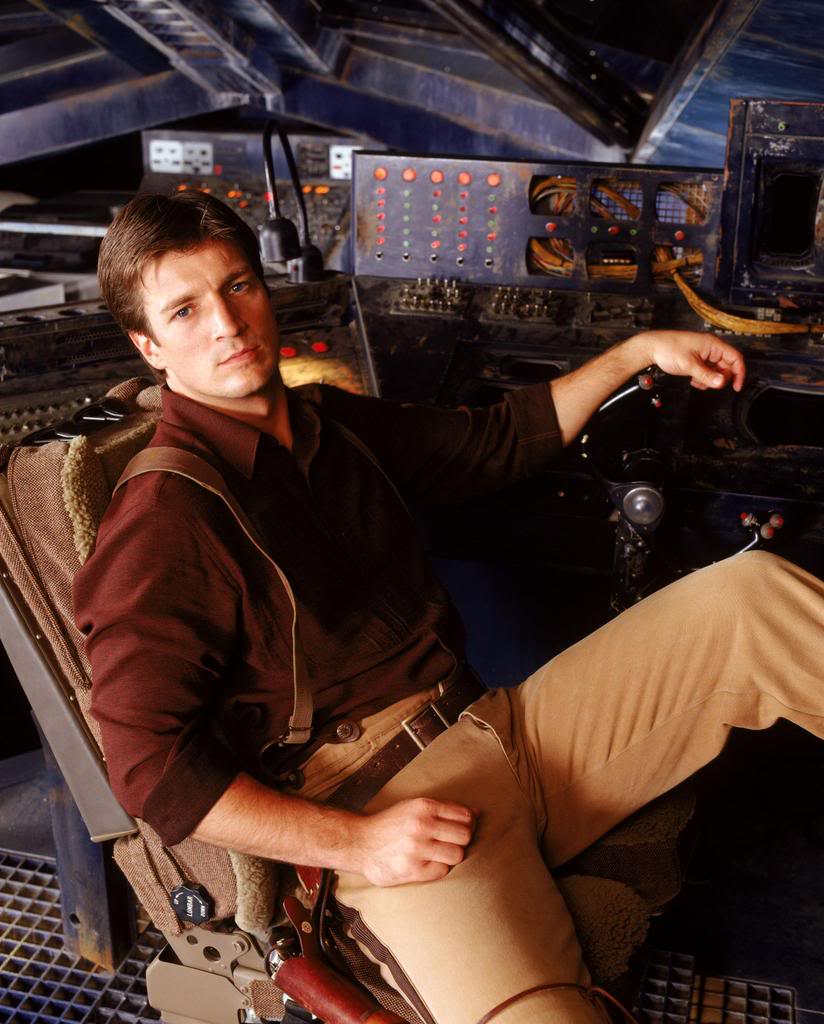
An example of the second type: recently I treated myself to the complete series of Firefly, and am enjoying an episode each evening. For those who haven't seen it, it was conceived by Joss Whedon, who went on to make Buffy the Vampire Slayer. Fox cancelled the series after only fourteen episodes; insane, as it had the quality, set-up and characters to have been as long running and successful as MASH. In one episode, Out of Gas, the space ship Serenity is stranded in space with only a few hours' air due to the failure of a part of the engine; something about the shape and size of a hair drier. And I thought, if the failure of that part is so catastrophic, you'd carry at least two spares. It wouldn't be bad luck if you got stranded that way, it would be the mechanic's fault, or the captain's. [EDIT: I'm wrong. See Wyndes' comment right at the bottom of the comments on this post.]

I put a lot of effort into making my stories plausible and removing plot holes - some improbable things may happen, but I hope my characters' reactions to them are believable. Readers do not always agree with me. "The best science-fiction should surely hold a smidgeon of credibility but the premise of this tale was utterly absurd," is one comment on Replica. Ah well. I have the same problem with most chick lit, James Bond and Dan Brown.

Tuesday, 5 June 2012

You don't have to be right, just convincing


I've just biked from my workshop in Hoxton to the Gherkin, 30 St Mary Axe. A good day to do it, though the weather is cold and blustery. (Call this June? Huh!) Few cars and vans, just red buses careering around in packs with a gleeful freedom non-Bank Holiday traffic does not allow.

I went to get a feel for the building close to, and take some photos, as part of my WIP is set there. In my fictional 2018 London, twenty metres of snow cover the city, and only the taller buildings are visible. One of my characters conceals his snowmobile inside the Gherkin. I've studied the website carefully. Of course, what I'd really like is to wander round the building, camera in hand, but this is not possible. Luckily, it's not necessary either. I can make it up.

Because in fiction, you don't need to be right, just convincing. I don't know any Security Service officers, but no readers have yet complained that Nick Cavanagh in Replica is an unbelievable MI5 spec op. Probably because they don't know any either. Nor has anyone said the scene set in the Dorchester in Remix with information gleaned from their website and Google Street View lacks verisimilitude.

My advice: do all the research you can, go to the places that figure in your books, talk to people doing the jobs your characters do if at all possible - then make the rest up. Do it well, and nobody will know.

N.B. If any Security Service Officers are reading this and wish to put me right, email me - I'm very discreet :o)

Wednesday, 30 May 2012

Book sales and earnings - the numbers

Last week I read a fascinating post by Stroppy Author on earning out - including the information that just because the author's royalties never add up to the advance (earn out) this does not mean the publisher is not making a fat profit. This is because the publisher makes so much more per book than the author. Obvious when you think about it, but something I'd never considered. (Tell me I'm not alone, please.)

This got me thinking about sales and earnings in general. It is often asserted that most indie authors make negligible sums, with a few famous exceptions, Amanda Hocking, Hugh Howey, John Locke et al.  Should we attempt to correct this misinformation, we are accused of bragging. Chuck Wendig said, "Stop using your sales numbers as a bludgeon. BUT I SELL FOUR BILLION EVERY TEN MINUTES may or may not be true, but what it most certainly is is irrelevant." In what way irrelevant, Chuck? Isn't it what the discussion is about?

I've noticed that traditionally-published writers are far more reticent about their sales and earnings than indies. They will tell you if they have just got a six-figure deal, but that's about it. The exception to this is when trads go indie, and blow the gaffe about the appallingly stingy royalties and advances they have decided to leave behind.

What writers as a group need is more openness from the traditionally published. As long as they keep quiet about the measly nature of the contract they have just signed, focusing instead on the fact that they are about to be published at all (Squeeeeeee!) then publishers will continue to get away with offering the same stringent terms and low pay. Terms that, spookily, are identical among all the big publishers, almost as if they'd got together to agree on them...

But publishers would never behave like that, would they?

Monday, 21 May 2012

The One Question to ask a prospective agent

Ah, I remember those long ago days when I used to submit to agents; how young I was, how naive, how filled with hope. It was a frustrating business - enough to make a writer get a bit sarky. I spent a surprising amount of money on paper, ink cartridges and postage, plus time researching which agents to approach, and the differing submission requirements of individual agents. I had faith in Remix (then called Catch a Falling Star or Heart of Rock) so I also spent time working out Questions to Ask an Agent ready for when I got The Call. I bookmarked several sites that dealt with this topic, and followed agents' blogs.

I now know there is only one question you need to ask a prospective agent:

What can you do for me?

And if the answer is not precise, persuasive and pretty damn exciting, forget it. Keep your 15% (notional if she doesn't find you a publisher). You don't need that agent. In the great upheaval that is going on in publishing today, agents will have to make drastic changes to the way they work in order to stay in business. Some are. Trident Media in New York is signing successful indie authors, a sensible change of approach. Some are turning e-publisher for their clients, with varying success. Others get defensive, expending energy assuring the world how essential they are.

Remember that although you pay an agent to work for you,  so she should be on your side, maintaining a good relationship with the publishers she knows is more important to her than any individual contract. She makes her money from the advance, so a poor royalty rate will not affect her as it will you. And she is unlikely to want to rock the boat on your behalf.

Illustration by LittleBluePaws on Deviant Art

I love this quote from Tom Simon, commenting on Passive Guy's blog: 
"What was that story I read in Aesop the other day?
There was this wolf, see, and this sheep, who needed to do business with the wolf but knew it was going to be dangerous. So the sheep hired a fox to be her agent.
The fox got 15 percent of the sheep."

Sunday, 13 May 2012

Publishing Myths Versus Reality

  • Publishers actively seek new, exciting authors. Publishers will always choose the safe over the adventurous, the well-known non-writer over the talented unknown writer, the book a bit like last year's surprise hit. Brace yourself for a flood of soft porn after the success of Fifty Shades of Grey.

  • Self-publishers, except for a few outliers, don't sell books to anyone except their friends and relations. While we are not all Hugh Howey, who has just announced his novel Wool is to be made into a film by Ridley Scott, many indie writers are selling well and making money.

  • All self-published authors need professional editing and proofreading. Some do, some don't. Check the sample before you buy.

  • Don't self-publish, as you will use up the first rights to your book, after which no publisher will touch it. Too many indie books have been snapped up by publishers after selling well for anyone but the most credulous to believe this any more.

  • Publishers will market your book, saving you the trouble. Publishers will market the socks off your book if they have paid a big advance for it. Otherwise, you are likely to find yourself on your own, just like an indie author.

  • Agents are looking for books they love. Agents are looking for books they can sell to the publishers they work with, as they occasionally admit in rave rejections.

  • Your book will be on sale in bookshops as long as there is a demand for it. After a few months, copies of your book will be returned to make way for newer books. But this does not mean you can easily get the rights back, as it will always technically be available as an ebook and online.

  • Amazon is bad because it is selling books cheaper than publishers want them sold, and in the end this will make books more expensive, which is bad for readers and authors, so publishers want to sell books more expensively now, which will be good for us all in the long run Who knows what will happen in the long run? I'll take cheaper books now, please.

  • If you have written an excellent book, it will find a publisher. Alas, not necessarily. If this were true, there would not be any successful indie authors.

  • Readers need publishers to tell them what to read. Curating is an important part of what publishers do. Readers are quite able to select the books they want to read, and have always done this. Now they have a bigger selection to choose from.

  • Ebooks cost as much to produce and supply to the customer as print books. Yeah, right, course they do.
Have I missed anything?

Tuesday, 8 May 2012

Amazon's doing well - heave half a brick at it

Recently, indignation at and vilification of Amazon has reached surprising levels; a member of the American Booksellers Association referred to it as 'the great Satan', an immoderate term more frequently used by Al-Qaeda to describe America. This article poses the question, does Jeff Bezos understand what he is doing? (For those in doubt, going by the evidence, the answer is Yes.) Scott Turow ranted here - doomed, we're all doomed! And for sheer batty bigotry, you can always rely on the membership at AbsoluteWrite.

These are but a tiny sample of the outraged huffing and puffing going on in the publishing industry about Amazon. One feels their energy would be better used in making their businesses more efficient and author- and reader-friendly in order to compete.

Here is the man himself in extracts from an interview. Note, no horns.


Sunday, 29 April 2012

"I Capture the Castle" and writer's angst

One of my favourite novels that I reread every few years is I Capture the Castle by Dodie Smith. If you haven't read it, you are missing a treat.

This novel was part of the inspiration for Remix; my narrator is intelligent but a little naive, like ICtC's heroine, and it may have been as a nod to Dodie Smith that I called her Caz, short for Cassandra. When the offspring went off with my ancient copy, I went on Amazon to replace it. I read the introduction by Valerie Grove, and was astonished:

"Dodie finished drafting the novel shortly after the war ended, but even the longed-for peace did not rescue her from the anguish she suffered over the book... The revisions went on for two years, and tormented her. She rewrote every line, under [her husband] Alec's critical supervision, rehearsing every line of dialogue and unable to stop thinking about it, even in bed, waking each morning with a visceral dread, her mind throbbing with nerves and nagged by doubts. She felt she was disintegrating mentally and physically. But her industry was unflagging."

I Capture the Castle is such a delightful, spontaneous read, it's difficult to imagine its author fretting and toiling over it for years. As soon as it was published, it became a huge hit - at which point no doubt Dodie Smith worried that she'd never be able to repeat her success.

Writing to publish is, I think, one of the most angst-ridden things you can do. We have to try not to let it get to us, even while noting that Dodie Smith's obsessive and anxious work undoubtedly contributed to the excellence of I Capture the Castle.

Moral: do your best but Don't Fret.

Friday, 20 April 2012

ITINs and not paying US tax to the IRS


Unless a British author applies to the IRS for the right paperwork, Amazon will retain 30% tax on all US book sales. Everything I'd heard about applying for an ITIN (individual taxpayer identification number) stressed how difficult, nay impossible, the process was. I'd read so many 'helpful' horror stories that I kept putting it off.

This February, my sales with a KDP Select Remix promotion were such that Amazon was going to withhold about $2,000 in US tax. This galvanized me into action, and I visited the American Embassy in London on 22nd February. I took with me:
I took lots of other stuff too - a blue pen, printouts of my sales, my Citibank dollar chequebook, a UK tax letter, two paperbacks in case of queues, but needed none of them. After going through various checkpoints, a nice chap copied my passport, stamped it, my letter and form, and told me I should receive a certificate in due course, which could be several months. When I had it, I was to send it with Form W-8BEN to Amazon. The whole thing took twenty minutes.

My ITIN arrived in the post from America on the 26th March, and I posted the W-8BEN to Amazon. And yesterday I received an email from Amazon (I'd emailed to ask if it had arrived) saying: The form arrived recently and it was just recorded for your account. Your withholding rate is now set to 0%.

And that was it. David Gaughran describes how to get an EIN instead of an ITIN over the phone here - but the word is you need persistence - they may put you on hold for half an hour or cut you off.

Sunday, 15 April 2012

An offer of representation from Trident Media NY

I was flattered to receive an email out of the blue last month from the prestigious New York literary agency, Trident Mediasaying that their chairman, Robert Gottlieb, had been following my success, and asking if I was interested in exploring the possibility of literary representation. I emailed copies of Remix and Replica, and then Erica Silverman, an experienced agent with TM, said she wanted to represent me.

I can't tell you how extraordinary I found this. On finishing Remix, I gave myself a year to find an agent, resolved to self-publish if I failed. I didn't expect to fail - I had faith in the book. Forty-odd agents and a handful of publishers rejected Remix, mostly with form rejections. Two approached me; some were complimentary; four read the whole thing. All passed on it.  Jane Judd said, "I have to admit to liking your writing," which amused me. Kate Shaw found my voice not distinctive enough. Broo Doherty told me books about rock stars are notoriously difficult to sell.

I would love my writing to go to the next level; a print deal, audio and more foreign rights. Not to mention film and television rights...what author does not dream of seeing her characters on screen? Emails between me and Trident Media zipped back and forth, and Erica and I spoke twice on the phone as she helped me get my head round what the deal would mean for me. They drew up and posted me a contract, which I read carefully.

And in the end, I said no.

This is a time of huge change in the industry. I don't know what will be happening next week, let alone in two years' time (the length of the contract). I do know I've sold a lot of books on my own, and probably made more money than I would have done had I managed to acquire an agent and a publisher in 2009/2010 when I spent a year trying. I'm going to keep writing, selling and wait to see what happens next. I have a lot of respect for Trident Media, and found Erica helpful and positive. This just wasn't the right deal for me at this particular moment.

Friday, 13 April 2012

Bargain author cards from Moo

Cameron Chapman mentioned on Facebook that she was getting cards made for the cost of the postage only, so I checked out Moo and ordered some myself.

They arrived today, five days later, and I'm really pleased with them.  They're a nice quality, and the Moo.com logo is reasonably discreet. Total cost for fifty double-sided cards, free sample pack, two images: £3.90.

Normal cost? £17.09 inc. VAT, p&p, and you can have a different design on each one.

Tuesday, 10 April 2012

Traditional Publishing Is The New Vanity Publishing

From The Hyperliterature Exchange
"Traditional publishing is the new vanity publishing." If you are the originator of this bon mot, quoted in Passive Guy's comments, come here and claim attribution.

Of course, one thing publishers CAN do is get your book into bookshops, and in a world where the majority of book sales are still print, this has value. I'd love a print deal myself - though an ebook deal, entailing swapping a 70% royalty for 17.5%, would not arouse my enthusiasm.

When writers protest they will settle for nothing less than a traditional publishing contract, a frequent reason they quote is 'validation'. Search for 'validation' on AbsoluteWrite and you'll come up with ten pages of quotes. Just as vanity presses turn your text into a book in your hand (at a cost) so the big publishing conglomerates will allow you to hold your head up and say you are 'properly' published (at a cost).

Authors certainly aren't hankering after a contract for the sake of the money, given the size of most advances. And any lucky trad-published writer who makes a small fortune (earning 8% of the price of her book) has made a big fortune for her publisher.  The writer of a popular book can make more on his own, and faster. I've noticed that new writers with a trad deal are much less likely to bandy figures about than indies.

Does a legacy deal let you off the chore of marketing? No. The majority of books get little or no promotion, unless the author does it himself.

Editing? You might get lucky with a brilliant editor. Or you might get one who wants you to rewrite your novel to fit her ideas, or one who misses nonsenses in the plot. I enjoyed Lee Child's Bad Luck And Trouble, but when the protagonists needed to find out what the sixth track on Jimi Hendrix's second album was called, they walked a long way east on Sunset to a record store and bought the CD. Really? They didn't just google it on their smartphones?

For those whose spectacles are still firmly rose-tinted, you need to read several scary and true stories of writers' experiences of publishing when it all goes wrong in this thread.

EDIT: I believe I have found the identity of the first person to call traditional publishing the new vanity publishing - Scott Nicholson, here, July 6th, 2010.

Sunday, 1 April 2012

Getting Away With Murder...


One of my lovely beta readers, William Urinoski, wasn't altogether happy with the ending of Replica because of what does, or rather doesn't, happen to the villain, Sir Peter Ellis. In his thoughtful critique he said:

"I think he might have benefited from a bit of Jack Reacher's brand of justice - not necessarily fatal, but extremely painful with a prolonged recovery time - followed by some time before the bench with the threat of an also-prolonged prison term...Though as much fun as it is to speculate about alternate endings, I don't mean to imply that yours isn't good. I think, now that I've spent the time writing about it, that I must be troubled by the fact that I think Pete (he really doesn't deserve to be called Sir Peter) got off too lightly...I think readers like endings where most everybody gets their just desserts. That's probably why Child's work consistently sells so well."

This stayed with me, because originally I had wanted Nick to kill or severely damage Sir Peter, and get away with it. And there was the rub - I couldn't work out how a character these days in central London could plausibly get away with the murder or even assault of someone known to him. What with forensics and a thorough police investigation, he wouldn't have a hope.

I'd never read any of Lee Child's thrillers (though Nick does in Replica) so recently I read three, Gone Tomorrow, Bad Luck And Trouble, and Worth Dying For. I can see why he is so successful; the books are gripping and unputdownable. My favourite was Bad Luck And Trouble, my least favourite Gone Tomorrow (torture scenes). With none of them was I entirely convinced by Reacher getting away with murder. Lots of murders, plus crippling assaults. However remote the district in Worth Dying For, I don't think four members of a family could simply disappear, along with six or seven other people, without questions being asked. In fifteen books, Jack Reacher kills 77 people, and gets away scot free. A bit of an eyebrow raiser, though Lee Child does it with great panache.

Perhaps I'll go back to writing fantasy, where heroes kill baddies all the time, with nothing to prevent them riding away into the sunset, rough justice done to the satisfaction of everyone.

Can any of you think of good examples of modern heroes getting away with murder in a totally believable way?

Sunday, 25 March 2012

Puzzled ruminations on book covers...


I recently read Nick Hornby's novel ,
Juliet, Naked. I like Nick Hornby's writing - About A Boy is one of my favourite novels - and I enjoyed it very much, apart from finding the ending a little unsatisfactory (the offspring agreed). It's consistently amusing and thought-provoking. But one thing I really hated about it was the cover. I'm not even sure which character the man on it is supposed to be. I know authors are given little or no say in the covers that are assigned to their books, but you'd think an author of Hornby's stature would be able to put his foot down.

Researching this post, I looked at dozens of Nick Hornby's book covers, and began to think that he has been remarkably badly served by his publisher, Penguin. The classy and cool US Juliet, Naked hardback cover, seen here at the far right, is a rare exception.

Self-publishers know how important a cover is. Our names won't attract readers (initially at any rate) and we don't have the recognition factor of authors whose books are on display in book shops. A striking thumbnail image on Amazon might attract a reader to look at the blurb, and then the sample, and then maybe buy. All ambitious indies put a lot of work into designing or commissioning covers, changing them if we get a better idea. There are frequent threads on Kindleboards seeking reactions and comments on artwork before the author commits. We take the whole thing very seriously.

So are the bad covers another instance of the complacency of Big Publishing? Or have some commissioning editors just got seriously bad taste?

Saturday, 17 March 2012

Emails from readers

One of the great perks of being (self) published is receiving emails from readers who have enjoyed my books and want to let me know. It's so kind of them to bother, and so encouraging to know they like my writing. I always answer -  when the sender has typed his/her email address wrong and I can't it distresses me. (Trish who wrote today, I tried to reply but my email kept bouncing back - and I did start a sequel to Remix, but wrote Replica instead.)

Way back in the early eighties I thought about writing an appreciative letter to Mary Renault, one of my favourite authors. I'd have had to send it via her publishers, I wasn't sure they'd forward it to South Africa where she lived, I didn't want to be a nuisance. I never wrote. Now I wish I had, as I know from my own experience it would have given her a cheering moment.

So here's to all readers out there who not only buy books, but write and thank their authors. Thank you.

Sunday, 11 March 2012

Things change - make the most of it

Yesterday I read Scott Turow's extraordinary rant about Amazon's evil empire, amusingly entitled Grim News.

Grim for publishers, bookshops and readers that is, though he tells us he personally, as an established author, will still manage okay. (Gosh, that's a relief.) I don't recognize the world he describes, where publishers and bookshops guard our cultural heritage and encourage readers to make discoveries of new authors and genres. I agree with Joe Konrath and David Gaughran - click on the links to read their opinions.

Scott Turow, as a successful author, did well out of the old system, so it's natural he should be resistant to change (though he should certainly be less resistant to logical thought). What I find odd is that many unpublished authors share his blinkered views, though there has never been a better time to be a writer than the present. Self-publishing has never been easier, and, short of marrying into the royal family, is the fastest way to a traditional publishing contract. I feel certain that once the publishing industry adapts, it and we will benefit. Everything is changing, and change means new opportunities.

It's not a sign of intelligence to keep doing the same thing and expect a different result. It's foolish to fight the current war with the weapons you used in the last. Let's all be grateful for our new options and make the most of them.