Wednesday, 26 June 2013
Fame, lasting and fleeting
Which would you rather: to be a rich and famous novelist during your lifetime, then sink into obscurity for ever, or struggle while alive and then have everlasting popularity and prestige? Galsworthy or Austen?
I doubt the best-selling vampire and zombie novels will be more than curiosities fifty years from now. Harry Potter just might become a classic, though in my opinion the later books are less entertaining than the early ones. Room, Before I Go To Sleep, and Gone Girl seem to me, gripping though they are, unlikely to last. What do you think? Nominations for lasting/non-lasting contemporary novels in the comments, please.
I hesitantly believe that long term, the public has excellent taste. Shakespeare is valued and Thomas Kyd, Christopher Marlowe, Ben Jonson, Francis Beaumont and John Fletcher all but forgotten. But ... a book has to be published, even if it doesn't sell well during the author's life, to have any hope of becoming lastingly popular. Paintings don't have this problem - see Van Gogh. Had Jane Austen's novels just been circulated among her family, she would be unknown today, to the great loss of the reading public. Which makes me wonder how many terrific books which failed to find a publisher in the last half-century languish in drawers or forgotten in attics, never to find their readers. Thanks to Jeff Bezos, this is far less likely to happen these days.
Tuesday, 18 June 2013
Sex in novels - more! No, less!
After the inexplicable success of 50 Shades of Grey, some writers are making their romances more sexually explicit, or penning erotica to cater to what they perceive the market wants. (I stoutly maintain that erotica is in its own category, quite separate from other fiction, and different rules apply. For one thing, it's much easier to sell, so perhaps these authors are making a canny move.) As a reader, it's not for me, for much the same reason I don't like musicals; the actors keep stopping to sing instead of getting on with the story.
But while some categories are getting steamier, new chaste ones are popping up. I only heard of Amish Romance recently via Passive Guy's post Why Amish Novels Are Hot, but there's a lot of it about. You can recognize the genre as the covers generally show a young woman in one of those white bonnets with strings looking wistful. Author Sarah Stegall commented on its appeal:
"It's an under-served market. My mother-in-law is not Amish, but grew up in that country and is an avid reader of Amish romances. She says the appeal of such stories, for her and her friends, is the lack of sex and profanity. These ladies are very uncomfortable with currently published romance novels, which qualify (to her) as pornography. She likes courtship stories, sweet adolescent romance stories, and such. Her friends also like the emphasis on religion, rather than worldly values. And yes, all of these ladies read their Amish romances on Kindles."
So there we go. I'm guilty myself of 'profanity' in my novels; I'm pleased that these days characters don't have to say 'mucking' as a makeshift alternative like Reg does in Mary Renault's excellent novel, The Charioteer. (On a side note, I cannot believe her dozy publishers have not released her books as ebooks. Or that the paperback has such a terrible cover.)
Just to confuse, there is also a steamy sub-genre of Amish romances, Gay Amish Romance. Something for every reader's taste.
While I was trawling the internet for illustrations for this post (the trouble I go to) I came across an ace site, Bad Romance Covers. Though not strictly relevant, I could not resist the cover on the right, When Dachshunds Ruled the Serengeti.
Now that's a title you wouldn't need to check to see if it had been used before...
But while some categories are getting steamier, new chaste ones are popping up. I only heard of Amish Romance recently via Passive Guy's post Why Amish Novels Are Hot, but there's a lot of it about. You can recognize the genre as the covers generally show a young woman in one of those white bonnets with strings looking wistful. Author Sarah Stegall commented on its appeal:
"It's an under-served market. My mother-in-law is not Amish, but grew up in that country and is an avid reader of Amish romances. She says the appeal of such stories, for her and her friends, is the lack of sex and profanity. These ladies are very uncomfortable with currently published romance novels, which qualify (to her) as pornography. She likes courtship stories, sweet adolescent romance stories, and such. Her friends also like the emphasis on religion, rather than worldly values. And yes, all of these ladies read their Amish romances on Kindles."
So there we go. I'm guilty myself of 'profanity' in my novels; I'm pleased that these days characters don't have to say 'mucking' as a makeshift alternative like Reg does in Mary Renault's excellent novel, The Charioteer. (On a side note, I cannot believe her dozy publishers have not released her books as ebooks. Or that the paperback has such a terrible cover.)Just to confuse, there is also a steamy sub-genre of Amish romances, Gay Amish Romance. Something for every reader's taste.
While I was trawling the internet for illustrations for this post (the trouble I go to) I came across an ace site, Bad Romance Covers. Though not strictly relevant, I could not resist the cover on the right, When Dachshunds Ruled the Serengeti.
Now that's a title you wouldn't need to check to see if it had been used before...
Saturday, 8 June 2013
Versions of reality
![]() |
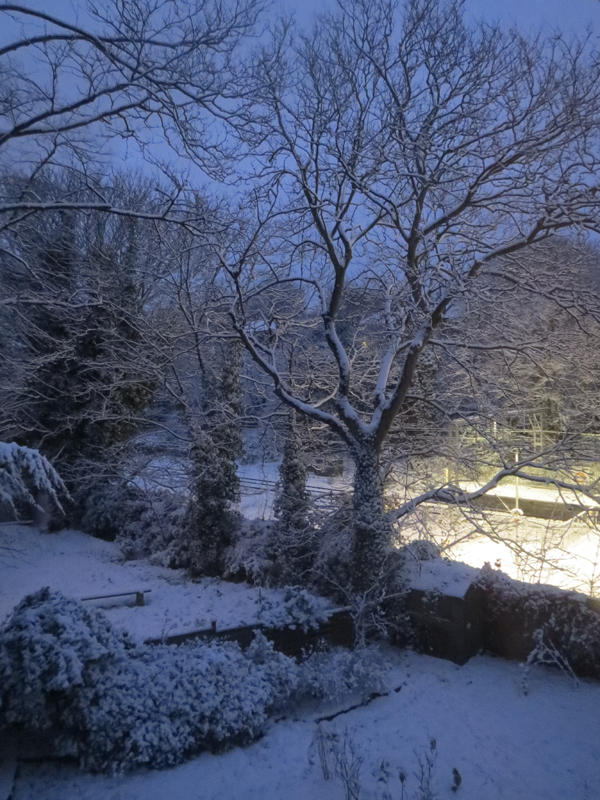
| The railway behind my/Beth's flat in the snow |
Beth's flat in Replica is based on my flat, including the non-working entry phone so Beth has to open a window and lean out to see who has rung her bell. Beth Two's dash through the gardens on to the railway station describes the layout as it was when I wrote it, though the station is now larger. (Nothing in London stays the same for long.)
Chatting about Replica to the offspring's boyfriend, I asked him how he'd imagined Beth's flat. "I think of it as this one," he said. And it occurred to me, he was one of only a handful of readers who would have exactly the same picture in his head of Beth's home and Beth Two's escape as I did.
Of course, this doesn't matter at all. If an author has done his job properly, the right reader will be able to imagine the scene correctly, though with variations. I can work out when I read some of my favourite books from the settings that come to mind, borrowed from where I was living at the time. Quite unlike films, where we all picture the characters and settings as we have seen them on the screen.
It's strange to think of the thousands of different versions of my novels that play in people's heads, as each reader brings his or her unique experience of life to my fiction.
Saturday, 1 June 2013
Draft2Digital and leaving KDP Select
When KDP Select started at the end of 2011, I was an early adopter. My books had sold very well on Amazon, while selling hardly any via Smashwords, so the decision was a no-brainer for me. And at the start of 2012 it enabled me to sell huge quantities of ebooks at a higher price than I'd been able to charge before, as well as making money from Kindle Owners' Lending Library (KOLL).
But what has it done for me lately? Over the past year, the benefits of KDP Select have dwindled, and Amazon has not yet offered anything to replace them. I'm not criticizing Amazon; Jeff Bezos runs his business extremely well, and has no obligation to promote my books for me. It's possible that Amazon no longer needs indie authors in the same way after the DoJ's judgement against the Price-Fix Six. I'm grateful for the opportunities Amazon has put my way, enabling me to prove there is a market for my writing and make quite a bit of money.
But though I expect most of my future sales still to come via Amazon, it may be time to branch out. Last week I came across a long article on Survivorship Bias, including this observation:
Lucky people tend to constantly change routines and seek out new experiences. The lucky try more things, and fail more often, but when they fail they shrug it off and try something else.
These days there is an alternative to Smashwords' clunky meatgrinder: Draft2Digital. Its site is classy, non-buggy and easy to use, its terms eminently reasonable. Support is fast and helpful. D2D's software converts your Word document into an ebook with a ToC and chapter breaks. Five of my six books reached the end of their three months in KDP Select yesterday, and I've now loaded them on Draft2Digital. Within the next week or two, they will go live on Barnes & Noble, Kobo and Apple's iBookstore.
I'm not expecting to sell much, at any rate initially, but I know from Statcounter that people are looking for epub versions of my novels, and now they will be able to buy them. I hope to be lucky - but if it doesn't work out, I'll try something else.
But what has it done for me lately? Over the past year, the benefits of KDP Select have dwindled, and Amazon has not yet offered anything to replace them. I'm not criticizing Amazon; Jeff Bezos runs his business extremely well, and has no obligation to promote my books for me. It's possible that Amazon no longer needs indie authors in the same way after the DoJ's judgement against the Price-Fix Six. I'm grateful for the opportunities Amazon has put my way, enabling me to prove there is a market for my writing and make quite a bit of money.
But though I expect most of my future sales still to come via Amazon, it may be time to branch out. Last week I came across a long article on Survivorship Bias, including this observation:
Lucky people tend to constantly change routines and seek out new experiences. The lucky try more things, and fail more often, but when they fail they shrug it off and try something else.
These days there is an alternative to Smashwords' clunky meatgrinder: Draft2Digital. Its site is classy, non-buggy and easy to use, its terms eminently reasonable. Support is fast and helpful. D2D's software converts your Word document into an ebook with a ToC and chapter breaks. Five of my six books reached the end of their three months in KDP Select yesterday, and I've now loaded them on Draft2Digital. Within the next week or two, they will go live on Barnes & Noble, Kobo and Apple's iBookstore.
I'm not expecting to sell much, at any rate initially, but I know from Statcounter that people are looking for epub versions of my novels, and now they will be able to buy them. I hope to be lucky - but if it doesn't work out, I'll try something else.
Tuesday, 21 May 2013
More rules I could do without
Why are some writers so fond of rules? Why are some indie writers so fond of rules? Isn't one of the main benefits of self-pubbing that you don't have to toe the line any more?
Back in 2009/10 when I was submitting Remix to agents, there were more rules than you could shake a stick at, and writers would anxiously obsess over them on forums. Double spacing yes, but should we really use ugly Courier or was Times New Roman acceptable? Agents, we knew, were captious and huffy creatures. There were lots of crimes that would result in an agent tossing your three chapters unread into the bin. These included omitting to enclose a self-addressed stamped envelope (I forgot once, and sure enough, didn't get the form rejection I was looking forward to adding to my collection). You had to study the agent's precise requirements and observe them to the letter, or she wouldn't even curl her pretty lip over your typescript.
We all did what we were told. To be fair, until Amazon changed everything we had no choice. (I may say it's still going on - read Carol Blake's handy list of 29 Ways NOT To Submit To An Agent. Reading that made me realize just how much I love not being a part of that scene any more.)
What irks me now is indies coming up with their own rules. Our book, we are told, will not be ready to publish until we have hired a professional editor, proofreader, formatter and cover designer. Not may not, but will not. Fleur Philips goes further: “One thing I feel indie or self pub authors MUST do for publicity and marketing is to hire a really good publicity firm to handle marketing and public relations ... if you can’t afford it, find a way to make it happen!” (Plih. Bog off, Fleur.) Others tell us we must write several books a year to succeed, and divide our time between marketing and writing.
To which I say, we are big grown-up indies. I can decide for myself whether or not I need to pay a proofreader (not, actually) and do all that other stuff. I do not need the new orthodoxy telling me what to do, and neither do you.
Back in 2009/10 when I was submitting Remix to agents, there were more rules than you could shake a stick at, and writers would anxiously obsess over them on forums. Double spacing yes, but should we really use ugly Courier or was Times New Roman acceptable? Agents, we knew, were captious and huffy creatures. There were lots of crimes that would result in an agent tossing your three chapters unread into the bin. These included omitting to enclose a self-addressed stamped envelope (I forgot once, and sure enough, didn't get the form rejection I was looking forward to adding to my collection). You had to study the agent's precise requirements and observe them to the letter, or she wouldn't even curl her pretty lip over your typescript.
We all did what we were told. To be fair, until Amazon changed everything we had no choice. (I may say it's still going on - read Carol Blake's handy list of 29 Ways NOT To Submit To An Agent. Reading that made me realize just how much I love not being a part of that scene any more.)
What irks me now is indies coming up with their own rules. Our book, we are told, will not be ready to publish until we have hired a professional editor, proofreader, formatter and cover designer. Not may not, but will not. Fleur Philips goes further: “One thing I feel indie or self pub authors MUST do for publicity and marketing is to hire a really good publicity firm to handle marketing and public relations ... if you can’t afford it, find a way to make it happen!” (Plih. Bog off, Fleur.) Others tell us we must write several books a year to succeed, and divide our time between marketing and writing.
To which I say, we are big grown-up indies. I can decide for myself whether or not I need to pay a proofreader (not, actually) and do all that other stuff. I do not need the new orthodoxy telling me what to do, and neither do you.
Friday, 10 May 2013
Friday, 3 May 2013
Lessons for Big Publishing from Kodak
Whatever happened to Kodak? Recently I treated myself to a new digital camera (a Canon ixus 500 HS, since you ask, and I'm very pleased with it). This morning a thought popped into my head; why, when I was browsing the internet for cameras, were there no Kodaks there?
At one time, Kodak was the big name in cameras and film. In 1900 they launched the Box Brownie at $1.00, which brought photography within the reach of the masses. The brand was huge throughout the twentieth century.
Last year they went bankrupt.
I bet you didn't know that in 1975, a Kodak engineer called Steve Sasson created the first digital camera, which took photos with a modest 10,000 pixels. Kodak went on to patent many digital technologies which are used in modern cameras, but it wasn't till 1995 that they launched the DC40, their first digital camera. What happened next? Not a lot. Kodak was afraid of cannibalizing their own business - 90% of film sales, 85% of camera sales in the US - so digital was left on the back burner, while other manufacturers rushed in to fill the gap. Digital boomed, while legacy photography dwindled, and Kodak dwindled right along with it.
Does any of this sound familiar? When ereaders appeared, Big Publishing hoped they were a passing fad, ignored the opportunities digital offered, and colluded to keep ebook prices high so as not to impinge on print sales. Meanwhile Amazon flourished and self-publishers became a force to be reckoned with.
Let me quote Pete Pachal's conclusions from his interesting article on the subject:
"The most immediate takeaway from the fall of Kodak is clear: Don't be afraid to cannibalize your own business in the name of progress. This is seen time and again in the digital revolution: Sony's reluctance to develop a competent digital Walkman left an opening for the iPod. Blockbuster laughed off Netflix in the early days, then went bankrupt when it couldn't compete with its Web-based competitor. And iPads may be eating up some Mac sales, but Apple's bottom line is stronger than ever.
"True innovative spirit is much more often found in smaller companies and startups rather than old-school behemoths of yesteryear. After all, if you don't have much to lose, you tend to make many more all-in bets. But, as Kodak has shown, if all you do is play it safe, the cost just to stay in the game will whittle you down until you've got nothing left."
At one time, Kodak was the big name in cameras and film. In 1900 they launched the Box Brownie at $1.00, which brought photography within the reach of the masses. The brand was huge throughout the twentieth century.
Last year they went bankrupt.
I bet you didn't know that in 1975, a Kodak engineer called Steve Sasson created the first digital camera, which took photos with a modest 10,000 pixels. Kodak went on to patent many digital technologies which are used in modern cameras, but it wasn't till 1995 that they launched the DC40, their first digital camera. What happened next? Not a lot. Kodak was afraid of cannibalizing their own business - 90% of film sales, 85% of camera sales in the US - so digital was left on the back burner, while other manufacturers rushed in to fill the gap. Digital boomed, while legacy photography dwindled, and Kodak dwindled right along with it.
Does any of this sound familiar? When ereaders appeared, Big Publishing hoped they were a passing fad, ignored the opportunities digital offered, and colluded to keep ebook prices high so as not to impinge on print sales. Meanwhile Amazon flourished and self-publishers became a force to be reckoned with.
Let me quote Pete Pachal's conclusions from his interesting article on the subject:
"The most immediate takeaway from the fall of Kodak is clear: Don't be afraid to cannibalize your own business in the name of progress. This is seen time and again in the digital revolution: Sony's reluctance to develop a competent digital Walkman left an opening for the iPod. Blockbuster laughed off Netflix in the early days, then went bankrupt when it couldn't compete with its Web-based competitor. And iPads may be eating up some Mac sales, but Apple's bottom line is stronger than ever.
"True innovative spirit is much more often found in smaller companies and startups rather than old-school behemoths of yesteryear. After all, if you don't have much to lose, you tend to make many more all-in bets. But, as Kodak has shown, if all you do is play it safe, the cost just to stay in the game will whittle you down until you've got nothing left."
Sunday, 28 April 2013
Sequels, like pregnancy, are best planned...
The quickest way to succeed as an indie author these days is to write a series in a popular genre. Failing this, write consistently in one genre. (I speak as one who hasn't done either.)
I am often asked if there will be a sequel to my novels. If readers relate to your characters, naturally they want more of them. The problem is, Remix, Replica and Ice Diaries were written as stand-alone stories, and it's hellishly difficult to write a sequel you haven't planned for. We all know JK Rowling took five years to finish the first Harry Potter, as in order to write it she needed to have a good idea of what would happen in the next six volumes. This took time to work out.
Plenty of authors, after publishing a popular book, are prevailed on by readers, agents, and publishers to write a follow-up they never intended. There's also the enticement that it's the easiest way to ensure an eager readership for your next novel. And it's almost always a mistake. Here's my incomplete and arbitrary list of disappointing because unplanned sequels to brilliant novels:
I am often asked if there will be a sequel to my novels. If readers relate to your characters, naturally they want more of them. The problem is, Remix, Replica and Ice Diaries were written as stand-alone stories, and it's hellishly difficult to write a sequel you haven't planned for. We all know JK Rowling took five years to finish the first Harry Potter, as in order to write it she needed to have a good idea of what would happen in the next six volumes. This took time to work out.
Plenty of authors, after publishing a popular book, are prevailed on by readers, agents, and publishers to write a follow-up they never intended. There's also the enticement that it's the easiest way to ensure an eager readership for your next novel. And it's almost always a mistake. Here's my incomplete and arbitrary list of disappointing because unplanned sequels to brilliant novels:
- Catriona, sequel to Kidnapped by Robert Louis Stevenson. RLS remarked in the Dedication, It is the fate of sequels to disappoint those who have waited for them, and he was not wrong. I've read it long ago, and can remember almost nothing about it, whereas I can recall every detail of Kidnapped.
- Bridget Jones: The Edge of Reason, sequel to Bridget Jones by Helen Fielding, has some good bits in it, but suffers the usual problem of unplanned sequels. Having got hero and heroine satisfactorily together in Book 1, the author is obliged to split them up in Book 2 and get them together again, leaving the reader doubting this second happy ending would last. Also, to my mind, the balance of Bridget being clever and Bridget being stupid is wrong in the second book. She's too often stupid.
- The Starlight Barking, sequel to 101 Dalmatians by Dodie Smith, is...how can I put this...barking. It involves all humans falling asleep at once, dogs levitating, and a visit from an extra-terrestrial dog called Sirius to rescue Earth's dogs from the possibility of nuclear war. Weird.
- Predator's Gold, sequel to Mortal Engines by Philip Reeve. In the end, he wrote a quartet of books. Mortal Engines is a ground-breaking, absorbing and surprising read, but I'd have preferred the story to end there.
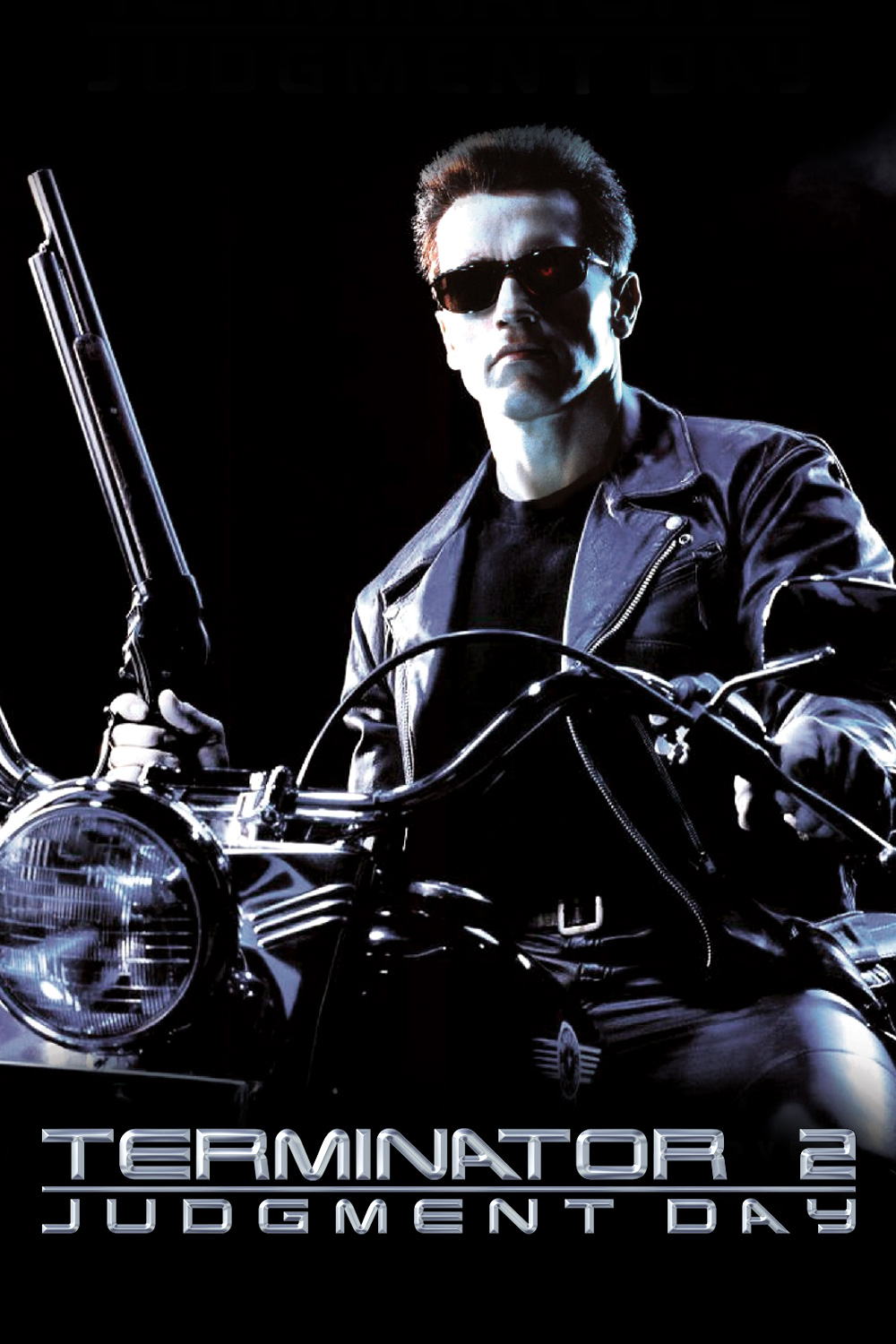
Films are no different. I only like the first Back to the Future and Planet of the Apes. The exception is Terminator 2, which I think is even better than Terminator 1.
What do you think? Nominations?
Sunday, 14 April 2013
Could Big Publishing put up a website to compete with Amazon's?
Someone on KBoards started a thread about whether readers would flee to the Big Six (actually the Big Five now we have Random Penguin) for guidance as to what to read, faced with a flood of indie offerings of mixed merit. Perhaps they might band together and create their own website to rival Amazon, selling only quality books from approved writers? KB Burke's comment was so interesting I asked his permission to quote it here:
Just some observations from a software developer ...
The big publishers haven't figured out discoverability. Their talent pool means little when readers can't find the books. Just because they put 1,000 vetted writers on a site, doesn't mean I can find the 12 that I want to read.
To do that, they need years of buying behavior. The science behind 'also boughts' is called Collective Intelligence, and making the website is 10% of the battle. Basically, you model the mass behavior of people, and then identify patterns. 16 year old guys who bought Warhammer books, also bought Halo books. If you're 16, and have bought one of these things, you might like the other. And so on. It's statistics, but you need data to build the model.
This is why Amazon bought Goodreads, for the data. If the Big Six understood software engineering they would have bought that network years ago. Websites don't sell books. Data sells books, and the big publishers don't have the data to compete. They are 10 years late to the party.
This why Amazon is always tweaking their algorithms. They get more data and adjust their models. It's no different than a presidential campaign modeling an election by 'likely voters.'
Dozens of tech companies, with big time talent, like Apple and Google and Sony, have failed to compete with Amazon. They don't have data, but they do have some of the most talented engineers in the industry. Think about that. No one in New York will have anything like Google's resources, and Google isn't hurting Amazon at all.
As far as quality goes ...
There might be 100,000 bad indie titles, with quality issues, but it is probably a bell curve. Some percentage are high quality, 5-10%, that compete with the big publishers.
This has been true since the 1930s and the beginning of pulp. There is an ocean of crap, and a small handful of standouts. Who curates that crap doesn't matter. This is why word of mouth sells books. Amazon has made significant leaps in this regard, with their algorithms, but no one else is close.
The ocean is bigger today, but the model is the same as Edgar Rice Burrows. His books sold, despite that ocean of crap.
Collective Intelligence is really why Amazon dominates the book industry. The traditional publishers have a team of editors telling me they found another Edgar Rice Burrows. They are telling me what I should read. Meanwhile Amazon is telling me what people do read. People who like Burrows have also bought x, y and z. This helps me find my tribe, so to speak.
This is the now. The automation of white collar jobs, like book curation, and it won't ever go away. New York thinks good taste can't be automated, but that's because they don't understand the science.
Saturday, 6 April 2013
Agents' U-turn on self publishing
Apparently Eric had a friend in publishing whose job it was to read the slush pile. In two years, she only found one 'marginally plausible submission' to pass on to her boss. (One does wonder how she kept her job, when she clearly wasn't any good at it.) And now, these appalling amateur books would be loosed on readers, who had hitherto enjoyed a limited selection pre-filtered by experts in publishing. It would be a disaster! Readers would be unable to cope! Good books would be drowned in a tsunami of crap!
I went to a meeting run by IPR License this week. There were two agents on the panel, Andrew Lownie and Louisa Pritchard, and both of them said that self-publishing, even for those intent on a traditional contract, was a sensible thing for an author to do. Sitting in the bus on the way home, it came to me just how enormous the changes have been in the publishing industry in the short time I've been writing. Though some don't like what they see as the new orthodoxy, and outposts of insanity like AbsoluteWrite will die rather than change their minds, among those who work in publishing there's been something of a 180 degree turn.
(I must say, I'm not at all sure about this being patted on the head by literary agents. I rather liked being a wild free indie, an outcast from traditional publishing. Approval is not what I'm used to.)
Thursday, 28 March 2013
AUTHARIUM update
I've had an email from Simon Mayott, co-founder and CEO of Autharium, letting me know about major changes made to the contracts offered to writers who publish with them - and this new contract will also apply to existing Autharium writers.
The main change is that the contract no longer lasts for the life of the copyright of the book (the author's lifetime plus seventy years) but for ten years:
"By submitting your Work to Autharium and accepting these Terms & Conditions, you grant to Autharium the exclusive right and licence to produce, publish, promote, market and sell your Work in any Digital Book Form (as defined in paragraph 1.4 below) in all languages throughout the world for ten (10) years. After ten years, this Agreement will continue to roll until you email support@autharium.com to revert your rights and end this Agreement with 30 days notice."
The rights granted by the author include all digital forms, including those not yet invented, worldwide - but nothing else:
"For avoidance of doubt this does not include physical or audio book forms, videos, film, television, merchandise or game forms."
Provision is made for the site going bust or ceasing to function:
"This Agreement shall automatically terminate if and when:
(a) a manager, receiver, or other encumbrancer takes possession of, or is appointed over the whole or any substantial part of, Autharium’s assets;
(b) Autharium enters into any arrangement or composition with or for the benefit of its creditors (including any voluntary arrangement under the Insolvency Act 1986); or
(c) a petition is presented or a meeting is convened for the purpose of considering a resolution for the making of an administrative order, the winding up or dissolution of Autharium (otherwise than by way of a voluntary liquidation for the purpose of reconstruction)."
This is much, much better than the original deal offered. Simon Mayott says "this is the first UK publisher contract to step outside of the standard terms". But since Autharium is a new type of publisher, digital only and not paying advances, I'm not sure the comparison is valid - nor for that matter would I sign a boilerplate publishing contract.
Also, ten years is quite a long time, and I wouldn't want to hand over my rights for that term without the certain knowledge that the publisher would do a better job than I on my own (or any other publisher I might hope to interest) could. That said, credit to them for responding to criticism in such a positive way. I'm no longer calling them a scam, and hope they sell many books for their authors.
The main change is that the contract no longer lasts for the life of the copyright of the book (the author's lifetime plus seventy years) but for ten years:
"By submitting your Work to Autharium and accepting these Terms & Conditions, you grant to Autharium the exclusive right and licence to produce, publish, promote, market and sell your Work in any Digital Book Form (as defined in paragraph 1.4 below) in all languages throughout the world for ten (10) years. After ten years, this Agreement will continue to roll until you email support@autharium.com to revert your rights and end this Agreement with 30 days notice."
The rights granted by the author include all digital forms, including those not yet invented, worldwide - but nothing else:
"For avoidance of doubt this does not include physical or audio book forms, videos, film, television, merchandise or game forms."
Provision is made for the site going bust or ceasing to function:
"This Agreement shall automatically terminate if and when:
(a) a manager, receiver, or other encumbrancer takes possession of, or is appointed over the whole or any substantial part of, Autharium’s assets;
(b) Autharium enters into any arrangement or composition with or for the benefit of its creditors (including any voluntary arrangement under the Insolvency Act 1986); or
(c) a petition is presented or a meeting is convened for the purpose of considering a resolution for the making of an administrative order, the winding up or dissolution of Autharium (otherwise than by way of a voluntary liquidation for the purpose of reconstruction)."
This is much, much better than the original deal offered. Simon Mayott says "this is the first UK publisher contract to step outside of the standard terms". But since Autharium is a new type of publisher, digital only and not paying advances, I'm not sure the comparison is valid - nor for that matter would I sign a boilerplate publishing contract.
Also, ten years is quite a long time, and I wouldn't want to hand over my rights for that term without the certain knowledge that the publisher would do a better job than I on my own (or any other publisher I might hope to interest) could. That said, credit to them for responding to criticism in such a positive way. I'm no longer calling them a scam, and hope they sell many books for their authors.
Wednesday, 20 March 2013
FAIRY DUST
I've spent the past two and a half years trying to work out what makes one book sell and not another, and ...
*SPOILER ALERT*
... I can, with confidence, disclose the results of my research: it's fairy dust.
Of course, it helps for your book to be well-written and gripping, and preferably one of a series. An enticing cover and blurb won't hurt. Many writers are enjoying modest success, making money and pleasing readers; but what is that extra something that fires people to tell their friends, post on Facebook or start forum discussions on Amazon? What makes people so obsessed with your characters that they write fanfic about them? I don't know, and interestingly, neither do the authors it happens to.
Take Hugh Howey, the latest indie phenomenon. He didn't promote Wool at all. It started life as a short story, published on KDP and left to twiddle its thumbs while Hugh concentrated on selling his full length novels. The short story sold surprisingly well, and eager readers asked for more. The rest is history. Hugh is a shrewd guy, able to work out what he wants and hold out for it; he also comes across as both nice and engaging, with a good relationship with his fans. But he admits he never expected Wool's success. I can remember him saying a year or so ago on Kboards that he was doing quite well, but wasn't in Amanda Hocking's league. He probably is now.
You can read Hugh's analysis here. This is how he begins:
I wonder if lottery winners get emails asking for advice on how to win the next one [...] Every week, I get a handful of emails from aspiring authors asking for advice. They want to know how I found success with my writing, and I find myself admitting that luck played the biggest part.
For more on this topic, read Hugh Howey and the Bestseller Myth.
Monday, 11 March 2013
AUTHARIUM
NOTE: Since writing this post, Autharium has amended its terms. See my post here.
Too good to be true? Yup.
Go to the Author Publishing Terms and Conditions and you will find:
By submitting your Work to Autharium and accepting these Terms & Conditions, you grant to Autharium the exclusive right and licence to produce, publish, promote, market and sell your Work in any Digital Form (as defined in paragraph 1.4 below) in all languages throughout the world for the entire legal term of copyright (and any and all extensions, renewals and revivals of the term of copyright).
What is the legal term of copyright? The author's lifetime, plus seventy years. So by publishing a novel on Autharium, you hand over the worldwide digital rights, including film, games, apps [see edit below], and means of transmission yet to be invented, until seventy years after you die.
The site tries to fudge this by assuring you that The copyright in your work shall remain your property. Quite what good this will do you when you have ceded all rights to them they do not say. They do say:
Please note that your removal of your Work from sale in accordance with paragraph 13.1 above will not terminate this Agreement nor cause the exclusive digital publishing rights that you have granted to Autharium pursuant to paragraph 1 above to revert to you.
Also:
If you wish to sell your Work in any Digital Form through any other publisher, distributor or means then you will need to contact Autharium at support@autharium.com to agree transfer of the digital publishing rights to your Work.
So if you decide you will do better selling via Amazon's KDP, or are offered a six-figure deal from a publisher, or someone is interested in buying the film rights, you will have to persuade Autharium to release you from its contract. For a large sum of money, no doubt. Or you could decide the contract is so one-sided it may be unenforceable; in which case you face years of stressful and expensive litigation.
I think Autharium is playing a numbers game. Recruit enough writers to sign that contract, and the odds of one of them turning out to be the next E.L. James and making the site owners a fortune are really not bad at all.
Autharium? Avoid, and tell your friends.
N.B. For more information, see The Passive Voice, where I read this story.
EDIT: I've just had a long phone conversation with Simon Maylott, one of the founders of Autharium. He tells me that their contract does not cover film, games or app rights. He also defended the contract as being in line with traditional publishing contracts. The problem is, traditional publishing contracts are not generally fair to the author - read a lawyer's opinion here. I don't believe Autharium is consciously attempting to dupe the vulnerable, or that its owners are villains. But the legal term of copyright is a very long time, and who will be dealing with those contracts in thirty or forty years? Supposing Autharium is successful, and is bought out by someone less scrupulous? If the deal they offer is good, and their authors happy with it, their terms do not need to be so stringent.
EDIT 2: Having now looked at some books epublished by Autharium, I can say their proofreading, formatting and cover design do not strike me as being of a professional standard.
* * * * *
Each day there seems to be a new shark circling eager newbie writers, hoping to make a killing. Autharium is the latest. Go to their site, and it all sounds most enticing - it's free, easy to join and load your work; publish with them and you will have 'global distribution' and keep 85% of your earnings!Too good to be true? Yup.
Go to the Author Publishing Terms and Conditions and you will find:
By submitting your Work to Autharium and accepting these Terms & Conditions, you grant to Autharium the exclusive right and licence to produce, publish, promote, market and sell your Work in any Digital Form (as defined in paragraph 1.4 below) in all languages throughout the world for the entire legal term of copyright (and any and all extensions, renewals and revivals of the term of copyright).
What is the legal term of copyright? The author's lifetime, plus seventy years. So by publishing a novel on Autharium, you hand over the worldwide digital rights, including film, games, apps [see edit below], and means of transmission yet to be invented, until seventy years after you die.
The site tries to fudge this by assuring you that The copyright in your work shall remain your property. Quite what good this will do you when you have ceded all rights to them they do not say. They do say:
Please note that your removal of your Work from sale in accordance with paragraph 13.1 above will not terminate this Agreement nor cause the exclusive digital publishing rights that you have granted to Autharium pursuant to paragraph 1 above to revert to you.
Also:
If you wish to sell your Work in any Digital Form through any other publisher, distributor or means then you will need to contact Autharium at support@autharium.com to agree transfer of the digital publishing rights to your Work.
So if you decide you will do better selling via Amazon's KDP, or are offered a six-figure deal from a publisher, or someone is interested in buying the film rights, you will have to persuade Autharium to release you from its contract. For a large sum of money, no doubt. Or you could decide the contract is so one-sided it may be unenforceable; in which case you face years of stressful and expensive litigation.
I think Autharium is playing a numbers game. Recruit enough writers to sign that contract, and the odds of one of them turning out to be the next E.L. James and making the site owners a fortune are really not bad at all.
Autharium? Avoid, and tell your friends.
N.B. For more information, see The Passive Voice, where I read this story.
EDIT: I've just had a long phone conversation with Simon Maylott, one of the founders of Autharium. He tells me that their contract does not cover film, games or app rights. He also defended the contract as being in line with traditional publishing contracts. The problem is, traditional publishing contracts are not generally fair to the author - read a lawyer's opinion here. I don't believe Autharium is consciously attempting to dupe the vulnerable, or that its owners are villains. But the legal term of copyright is a very long time, and who will be dealing with those contracts in thirty or forty years? Supposing Autharium is successful, and is bought out by someone less scrupulous? If the deal they offer is good, and their authors happy with it, their terms do not need to be so stringent.
EDIT 2: Having now looked at some books epublished by Autharium, I can say their proofreading, formatting and cover design do not strike me as being of a professional standard.
Wednesday, 6 March 2013
Don't use Times New Roman on your book cover - ever
Covers are probably THE most important selling tool for your book, because we are all more influenced by presentation than we think. As a designer, I'm well aware of this, but I still remember when my daughter was four coming across a delightful photo in the Mothercare catalogue of a small girl on a beach wearing a banana-yellow tracksuit. I knew there was nothing exceptional about the garment, I knew I was being seduced by the image - but I ordered the tracksuit just the same.
A browsing reader will first be attracted by your cover; will then read the blurb, the reviews and the sample. If these all pass muster, you've got a sale.
I've always designed my own covers because it's fun, and boy, were the first ones bad. As I've got my eye in and developed my Photoshop skills they've improved (I was thrilled when Joel Friedlander approved Ice Diaries' cover). I'm not sure I've mastered making the genre clear - but then my novels are cross-genre which makes them trickier. My earliest efforts weren't for publication, but for the peer review sites, YouWriteOn and Authonomy, so perhaps their poor quality is forgiveable. I'd have posted an example, embarrassing though they are, but seem to have deleted the early ones. I reckon I've made every newbie mistake going; red on black lettering, saving in jpeg (why has it gone all fuzzy?) and using Times New Roman as my title font. TNR over a muddy photograph or a DIY drawing screams indie, and not in a good way.
I'm all for doing everything you can yourself when you self-publish. You will move into profit more quickly, learn a lot, and often do a better job than paid professionals simply because you care more. But if you have no design background and don't find it interesting, then you are ill-advised to design your own cover. A well-meaning friend may offer to have a go, but do not accept unless you feel a) you can ask him/her for alterations if it's not quite right, and b) you won't feel obliged to use it if it's dire.
A browsing reader will first be attracted by your cover; will then read the blurb, the reviews and the sample. If these all pass muster, you've got a sale.
I've always designed my own covers because it's fun, and boy, were the first ones bad. As I've got my eye in and developed my Photoshop skills they've improved (I was thrilled when Joel Friedlander approved Ice Diaries' cover). I'm not sure I've mastered making the genre clear - but then my novels are cross-genre which makes them trickier. My earliest efforts weren't for publication, but for the peer review sites, YouWriteOn and Authonomy, so perhaps their poor quality is forgiveable. I'd have posted an example, embarrassing though they are, but seem to have deleted the early ones. I reckon I've made every newbie mistake going; red on black lettering, saving in jpeg (why has it gone all fuzzy?) and using Times New Roman as my title font. TNR over a muddy photograph or a DIY drawing screams indie, and not in a good way.
I'm all for doing everything you can yourself when you self-publish. You will move into profit more quickly, learn a lot, and often do a better job than paid professionals simply because you care more. But if you have no design background and don't find it interesting, then you are ill-advised to design your own cover. A well-meaning friend may offer to have a go, but do not accept unless you feel a) you can ask him/her for alterations if it's not quite right, and b) you won't feel obliged to use it if it's dire.
Friday, 22 February 2013
Tuesday, 19 February 2013
Crisps and Chips - UK and US English
Yesterday evening I was delighted to have a Skype discussion with a book club in Defiance, Ohio, (how cool a name is that for a town?) who were reading Remix. It's awesome not only to be able to chat to readers across the Atlantic, but to see them on screen.
Karen, who contacted me, had made a list of unfamiliar British expressions she'd come across in my novel; she and the other members guessed the meaning then I attempted to give a definition. What struck me was how many words in use here are unknown over there - so many that I now have a new respect for my American readers. I knew about the obvious ones, like tap and faucet, boot and trunk, trousers and pants, but that's not the half of it.
One word I'd already learned about and have avoided in my later books is "jumper". In America, a jumper is a sleeveless dress worn over a blouse or sweater or a child's garment consisting of straight-legged pants attached to a biblike bodice. When Caz pulls on a sloppy jumper over her dress US readers are not visualizing her outfit as I see it. I now stick to sweater.
Jeff Pike was responsible for the most incomprehensible words as he uses slang and swears a lot. Examples: "can't be arsed," "I don't give a toss," "saddo", "tosser", "poncey", "gaff". Caz's vocabulary is milder, but "Bog off" and "bally" were puzzling.
I didn't know that in America a plaster is a bandaid. A torch is a flashlight. Karen explained that a torch means a flaming brand; the advantage is theirs, as we have to make do with one word for both. Chocolate digestives are unknown in the US, and I struggled to explain why they are called digestives (possibly advertised as good for the digestion?)
Parkour and ligger are perhaps a little obscure even in this country. Still, what good is a book if you don't learn the odd new word from it?
Karen, who contacted me, had made a list of unfamiliar British expressions she'd come across in my novel; she and the other members guessed the meaning then I attempted to give a definition. What struck me was how many words in use here are unknown over there - so many that I now have a new respect for my American readers. I knew about the obvious ones, like tap and faucet, boot and trunk, trousers and pants, but that's not the half of it.
One word I'd already learned about and have avoided in my later books is "jumper". In America, a jumper is a sleeveless dress worn over a blouse or sweater or a child's garment consisting of straight-legged pants attached to a biblike bodice. When Caz pulls on a sloppy jumper over her dress US readers are not visualizing her outfit as I see it. I now stick to sweater.
Jeff Pike was responsible for the most incomprehensible words as he uses slang and swears a lot. Examples: "can't be arsed," "I don't give a toss," "saddo", "tosser", "poncey", "gaff". Caz's vocabulary is milder, but "Bog off" and "bally" were puzzling.
I didn't know that in America a plaster is a bandaid. A torch is a flashlight. Karen explained that a torch means a flaming brand; the advantage is theirs, as we have to make do with one word for both. Chocolate digestives are unknown in the US, and I struggled to explain why they are called digestives (possibly advertised as good for the digestion?)
Parkour and ligger are perhaps a little obscure even in this country. Still, what good is a book if you don't learn the odd new word from it?
Tuesday, 12 February 2013
Conduct becoming a writer
Once upon a time authors were mysterious beings, recognizable to their readers only by a black and white photograph on the inside flap of a hardback cover, or occasionally at book signings. The internet has changed all that. Most writers have websites, Facebook pages, blogs and twitter accounts; we are there to be found by anyone who is interested.
We also have the opportunity to disgrace ourselves like never before, achieving instant fame of a really, really undesirable kind (see this Guardian article on poor Jacqueline Howett). Here are a few things I've learned about appearing on the internet...
- It's not good to get into rows on forums. If things start to get heated I wander off and do some useful task like the washing up. I don't have to have the last word.
- About reviews - even the wrongest person from Planet Wrong is entitled to his opinion.
- Bear in mind that people you write about will come across your remarks.
- No one needs to know what your politics are, or your religion come to that. It may put them off, even if you aren't National Front and Wicca (with apologies to all witches).
- Being polite and helpful is a Good Thing. It's also good for your image.
- Moaning and grumbling are to be avoided.
What would you add?
Friday, 18 January 2013
The appeal of post-apocalyptic fiction
Having recently published Ice Diaries, which tells the story of a small group of survivors in a 2018 London under twenty metres of snow, I got to wondering about the popularity of post-apocalyptic novels. Why are we so willing to imagine the end of our civilization, when for most of us in the West we have never had it so good?What is the attraction of losing everything that makes our lives easy and getting back to basics - sometimes with added zombies?
Here are my theories as to why we find a post-apocalyptic scenario appealing:
- In an increasingly Nanny state, the disappearance of tiresome rules and bureaucracy. No more parking tickets or obsessively checking the speedometer to avoid a fine or remembering to put the rubbish out on a Friday, after 5.30 but not before.
- The chance to have adventures and move out of one's comfort zone. Farewell nine to five.
- The novelty of being in a familiar setting but under hugely different circumstances.
- There is a looter and pillager deep in all of us, just waiting for an opportunity. The collapse of civilization makes looting acceptable, even necessary.
- You can, like my heroine Tori, get to choose an opulent flat to live in that you could never normally afford.
- Having to be resourceful, and having more control over one's life.
- Immediate and rough justice, instead of our flawed and expensive judicial system - whose results often, after an agonizingly long wait, amount to rough justice.
- The planet getting a rest from its biggest depradator, man.
Tuesday, 15 January 2013
ICE DIARIES ~ the paperback
Yesterday the first paperbacks of Ice Diaries arrived. Always an anxious moment, opening the package; I'd got the margins wrong on the proof copy, which meant a lot of reformatting. I was confident enough not to pay £21 for another proof, but the odd doubt lingered. I enjoy formatting for print (I do it on Word, not owning InDesign) and this time I succumbed to the lure of dropped caps. The books look good and I'm rather proud.
Though digital is undoubtedly the future, there will always be a market for print editions, and as an author I like to have a physical copy of my books.
You can buy Ice Diaries on Amazon UK for £6.99 with free postage, or $10.99 on Amazon US.
Wednesday, 2 January 2013
Persistence
2012 has been a good year for me.
My novels have been selling steadily, if not in the huge quantities they did in 2010/11, bringing my total ebook sales to over 60,000. I published a new novel. I've recently had a nice run of enthusiastic reviews, and for a writer nothing is more rewarding than knowing readers have enjoyed your books.
So I had intended to write an assessment of the highs and lows of 2012, plus hopes and predictions for 2013. It was going to be all bullet points - you'd have loved it. I did the illustration specially.
But then I changed my mind and decided to write briefly about persistence. Because in an overcrowded and competitive marketplace, persistence probably matters more than anything, including talent. It's so easy to get discouraged as a writer; sometimes the effort seems pointless. But just keeping going as others fall by the wayside puts you in an elite group, and it's from that group that successful and famous authors will emerge.
Here's a toast to 2013: health, happiness and success!
My novels have been selling steadily, if not in the huge quantities they did in 2010/11, bringing my total ebook sales to over 60,000. I published a new novel. I've recently had a nice run of enthusiastic reviews, and for a writer nothing is more rewarding than knowing readers have enjoyed your books.
So I had intended to write an assessment of the highs and lows of 2012, plus hopes and predictions for 2013. It was going to be all bullet points - you'd have loved it. I did the illustration specially.
But then I changed my mind and decided to write briefly about persistence. Because in an overcrowded and competitive marketplace, persistence probably matters more than anything, including talent. It's so easy to get discouraged as a writer; sometimes the effort seems pointless. But just keeping going as others fall by the wayside puts you in an elite group, and it's from that group that successful and famous authors will emerge.
Here's a toast to 2013: health, happiness and success!
Subscribe to:
Posts (Atom)